


Quick Answer: An automatic watch (also called self-winding watch) is a mechanical timepiece that winds itself through the natural motion of your wrist. Inside the watch, a weighted rotor spins as you move, transferring energy to the mainspring that powers the watch. Unlike quartz watches that need batteries, automatic watches run entirely on mechanical energy—no batteries required. Most automatic watches maintain 38-70 hours of power reserve, meaning they'll keep running for about two days if left unworn. This technology dates back to 1770 but remains the preferred choice for watch enthusiasts who appreciate mechanical craftsmanship over electronic convenience.

How Automatic Watches Work
Every automatic watch contains a centuries-old mechanical system that converts motion into timekeeping energy. Understanding this system helps you appreciate why enthusiasts pay premium prices for "outdated" technology when cheap quartz alternatives exist.
The Rotor: Your Movement Powers the Watch
The rotor is a semicircular weighted disc visible through exhibition casebacks on most modern automatic watches. This rotor spins freely on a central pivot point, rotating with every movement of your wrist—walking, typing, gesturing, driving. The rotor's off-center weight causes it to swing downward regardless of orientation, creating continuous rotation throughout daily wear.
This rotation transfers through a series of gears to the mainspring—a coiled metal ribbon that stores energy like a wound-up toy. As you wear the watch, the rotor continuously adds tension to the mainspring. When you remove the watch, the stored energy slowly releases, powering the watch until the mainspring fully unwinds (typically 38-70 hours depending on the movement).
The Escapement: Regulating Energy Release
The mainspring wants to release all stored energy instantly, like an unwinding toy car. The escapement prevents this by releasing energy in precisely measured increments. The balance wheel oscillates back and forth (typically 6-10 times per second), and with each oscillation, the escapement releases a tiny portion of mainspring energy. This creates the characteristic "tick-tick-tick" of mechanical watches—though automatic watches actually produce a smooth sweeping seconds hand since they tick 6-10 times per second rather than once per second like quartz.
The Gear Train: Translating Ticks to Time
A series of precisely machined gears converts the escapement's regulated energy pulses into the rotation of hour, minute, and seconds hands. The gear ratios ensure the seconds hand rotates once per minute, the minute hand once per hour, and the hour hand once per 12 hours. This mechanical calculation happens continuously, 24 hours daily, without electricity, batteries, or digital processing—purely through mechanical engineering perfected over three centuries.

Automatic vs Manual vs Quartz: Understanding Movement Types
Three primary watch movement types dominate the market, each with distinct advantages. Understanding these differences helps you choose the right watch for your lifestyle.
Automatic (Self-Winding) Mechanical
How it works: Wrist motion spins the rotor, which winds the mainspring automatically. No daily winding required if worn regularly.
Accuracy: ±15-30 seconds per day (considered acceptable for mechanical watches). Positional variance exists—the watch may run faster or slower depending on whether it rests dial-up, dial-down, or on its side overnight.
Maintenance: Professional servicing every 5-7 years ($150-500 depending on brand and movement complexity). The movement requires cleaning, lubrication, and regulation to maintain accuracy over decades.
Power reserve: 38-70 hours typically. The watch stops if unworn for 2-3 days; restarting requires wearing it or manual winding.
Price range: $100-$50,000+ (entry-level Seiko 5 to Grand Seiko and Swiss luxury brands).
Best for: Watch enthusiasts who appreciate mechanical craftsmanship, daily wearers who'll keep the watch running through regular use, collectors building horological collections.
Manual (Hand-Wound) Mechanical
How it works: You wind the crown daily (20-40 rotations) to tension the mainspring. No rotor exists—the movement is slimmer than automatic calibers.
Accuracy: ±15-30 seconds per day, similar to automatic movements.
Maintenance: Same 5-7 year service interval as automatic movements.
Power reserve: 35-72 hours typically. Daily winding ritual required—if you forget, the watch stops.
Price range: $80-$100,000+ (entry-level Seagull chronographs to Patek Philippe complications).
Best for: Enthusiasts who enjoy the daily winding ritual, dress watch buyers wanting slimmer profiles, vintage watch collectors, chronograph purists (many chronographs use manual movements).
Quartz (Battery-Powered)
How it works: A battery sends electrical current through a quartz crystal, causing it to vibrate at precisely 32,768 times per second. A circuit counts these vibrations and advances the motor one tick per second.
Accuracy: ±15 seconds per month—roughly 60 times more accurate than mechanical movements.
Maintenance: Battery replacement every 2-5 years ($10-50). No servicing required unless the movement fails.
Power reserve: 2-10 years on a single battery.
Price range: $20-$5,000+ (Casio basics to Grand Seiko quartz and high-accuracy thermocompensated models).
Best for: Practical users prioritizing accuracy and low maintenance, professionals needing reliable timekeeping, budget-conscious buyers, travelers who won't wear watches daily.
Quick Comparison Table
| Feature | Automatic | Manual | Quartz |
|---|---|---|---|
| Power Source | Wrist motion | Daily hand-winding | Battery |
| Accuracy | ±15-30 sec/day | ±15-30 sec/day | ±15 sec/month |
| Maintenance | Service every 5-7 years | Service every 5-7 years | Battery every 2-5 years |
| Power Reserve | 38-70 hours | 35-72 hours | 2-10 years |
| Case Thickness | Thicker (rotor adds height) | Slimmer (no rotor) | Varies |
| Seconds Hand | Smooth sweep | Smooth sweep | One-tick-per-second |
| Entry Price | ~$100 | ~$80 | ~$20 |
Pros and Cons of Automatic Watches
Advantages
No batteries required: Automatic watches run indefinitely on mechanical energy. You'll never experience dead battery frustration or waste trips for battery replacement. In a world of constantly-charging devices, the self-sufficient mechanical watch offers refreshing independence.
Craftsmanship appreciation: Each automatic movement contains 100-300+ individual components, machined to tolerances measured in microns, assembled by trained watchmakers. Owning an automatic watch connects you to centuries of horological tradition and engineering expertise. The exhibition caseback transforms your watch into wearable mechanical art.
Smooth seconds hand: The sweeping seconds hand—moving 6-10 times per second rather than once—creates fluid motion that quartz's tick-tick-tick can't match. Watch enthusiasts find this mesmerizing; non-enthusiasts may not notice or care.
Longevity and heirloom potential: Properly maintained automatic watches last generations. Your grandfather's mechanical watch can be serviced and worn today; your grandfather's quartz watch likely died decades ago when circuits failed. Automatic watches become family heirlooms; quartz watches become e-waste.
Resale and collecting value: Mechanical watches hold value better than quartz alternatives. Certain models appreciate significantly—the Rolex Submariner, Omega Speedmaster, and Seiko SKX007 all sell used for more than original retail. Quartz watches depreciate immediately and rarely become collectible.
Disadvantages
Lower accuracy: Even the best automatic movements lose or gain 15-30 seconds daily—roughly 1-2 minutes weekly. Quartz watches gain or lose 15 seconds monthly. If precise timekeeping matters for your profession, automatic watches require frequent adjustment or acceptance of approximate time.
Higher cost: Entry-level automatic watches start around $100 (Seiko 5), while decent quartz watches cost $20-50. The mechanical complexity commands premium pricing at every tier—a $500 automatic competes with $100 quartz watches in pure timekeeping function.
Maintenance requirements: Automatic movements need professional servicing every 5-7 years, costing $150-500+ depending on brand and movement. Neglecting service eventually causes accuracy degradation and movement failure. Quartz watches need only battery replacement.
Stops when unworn: Leave your automatic watch unworn for 2-3 days and it stops. Restarting requires wearing it (10-15 minutes of motion) or manual winding. If you rotate between multiple watches or travel frequently without wearing watches, automatics become inconvenient. Watch winders solve this but add $50-500 to your investment.
Thicker cases: The automatic rotor adds 2-3mm height versus manual movements. Dress watch purists prefer manual-wind movements for slimmer profiles that slide under shirt cuffs more elegantly.
How to Wind and Care for Your Automatic Watch
Initial Winding (New or Stopped Watch)
When your automatic watch has stopped completely, manual winding kickstarts the movement before relying on wrist motion:
- Unscrew the crown (if your watch has a screw-down crown) by turning counterclockwise until it pops out to the winding position.
- Wind the crown clockwise 30-40 rotations. You'll feel slight resistance as the mainspring tightens. Modern movements include slip clutches that prevent overwinding—you cannot damage the watch by winding too much.
- Set the time by pulling the crown to its outermost position and rotating to the correct time. For date-equipped watches, avoid changing the date between 9 PM and 3 AM when the date mechanism engages—doing so can damage internal components.
- Push the crown back and screw it down (if applicable) to restore water resistance.
Daily Wearing Habits
Wear it regularly: 8-10 hours of daily wear provides sufficient motion to maintain full power reserve. Office workers, active individuals, and anyone with normal arm movement will keep their automatic running without thinking about it.
Sedentary days: If you sit motionless for extended periods (desk work without walking, long flights), supplement with brief manual winding or arm movement. Some movements need more motion than others—lower-beat movements (21,600 vibrations per hour) generally wind more efficiently than high-beat movements (28,800 vph).
Storing the watch: When removing your watch overnight, position it dial-up for most neutral rate (neither fast nor slow). Positional variance affects accuracy—some positions run fast, others slow. Dial-up typically produces the most stable rate.
Maintenance Schedule
Every 5-7 years: Full service by certified watchmaker—movement disassembly, cleaning, lubrication, gasket replacement, regulation, and water resistance testing. Cost varies from $150 (Seiko) to $500+ (Swiss luxury brands).
Signs service is needed: Accuracy degradation beyond normal variance, power reserve shortening noticeably, hesitation or stopping despite full wind, grinding or scratching sounds during winding.
Water resistance: Have water resistance tested annually if you swim with your watch. Gaskets degrade over time—a watch rated for 100m when new may leak at 30m after five years without gasket replacement.
What to Avoid
Magnetic fields: Strong magnets (phone speakers, laptop speakers, magnetic clasps) can magnetize movement components, causing significant accuracy problems. Modern movements include antimagnetic features, but avoiding magnetic exposure remains wise practice.
Shock and impact: While modern automatic movements include shock protection (Incabloc, Parachrom, etc.), dropping your watch or heavy impacts can damage the escapement. Remove watches before activities involving significant impact—golf, baseball, hammering.
Extreme temperatures: Lubricants thicken in extreme cold and thin in extreme heat, affecting accuracy. Avoid leaving watches in hot cars or wearing them in saunas.
DIY repairs: Opening the caseback without proper tools and training risks dust contamination, scratching, and gasket damage. Leave all service to qualified watchmakers.
Best Automatic Watches for Beginners
Starting your automatic watch journey doesn't require thousand-dollar investments. These recommendations deliver genuine mechanical watchmaking at accessible pricing, proving whether you'll actually enjoy wearing automatic watches before committing to expensive models.
Best Budget Entry: Seiko 5 SNK809 ($110)
The SNK809 introduces automatic watches at lower cost than most quartz fashion watches. The 7S26 movement—lacking hand-winding and hacking—runs for decades with minimal service. The 37mm case fits smaller wrists perfectly. The military field watch styling works everywhere from classrooms to offices. Watch communities universally recommend this as the first automatic purchase—it costs less than dinner for two while delivering genuine mechanical watchmaking.
Trade-off awareness: The 7S26 can't be hand-wound (must shake to restart) and doesn't hack (seconds hand doesn't stop for precise time-setting). The small 37mm case looks dated on larger wrists. The 30m water resistance handles handwashing only. These compromises remain acceptable at $110 pricing.
Best All-Rounder: Seiko 5 Sports SRPD55 ($295)
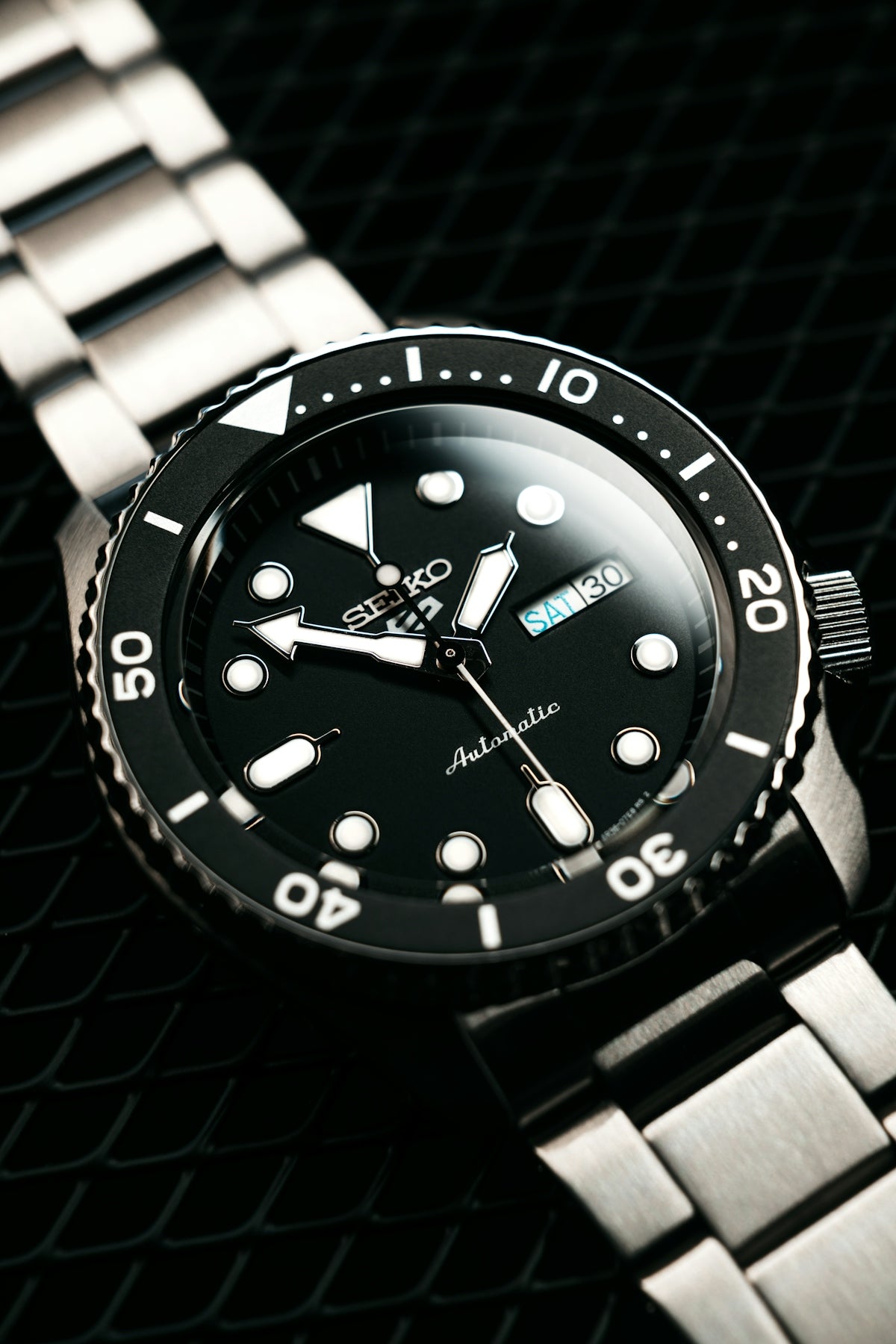
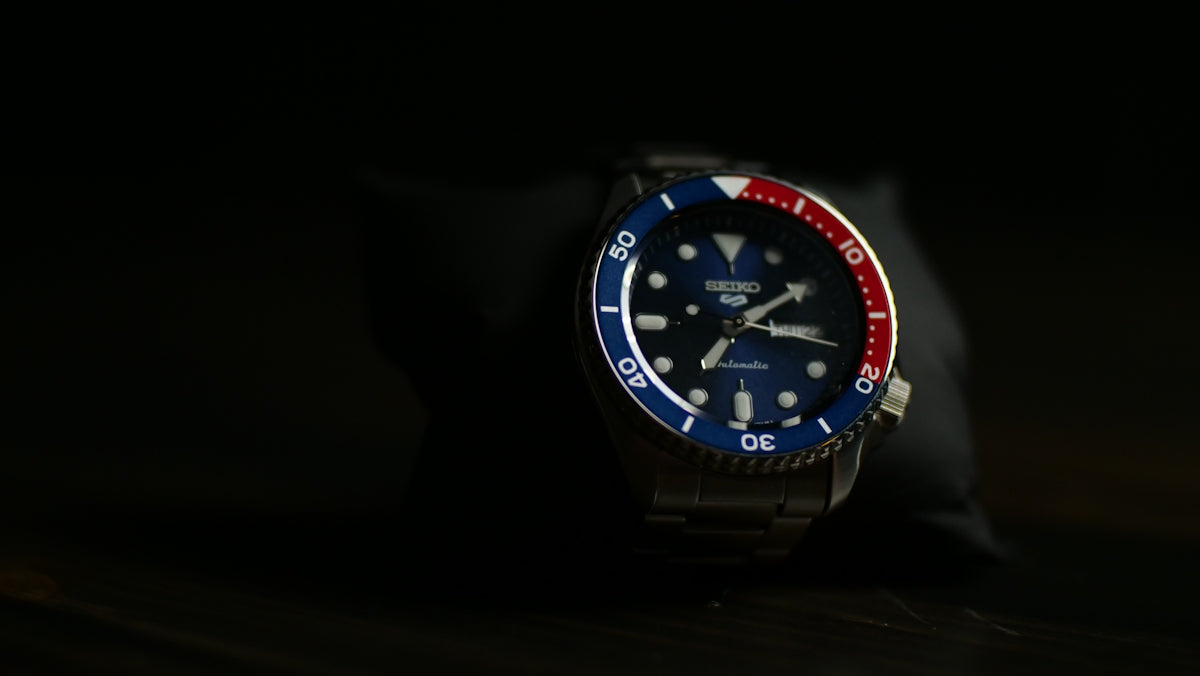
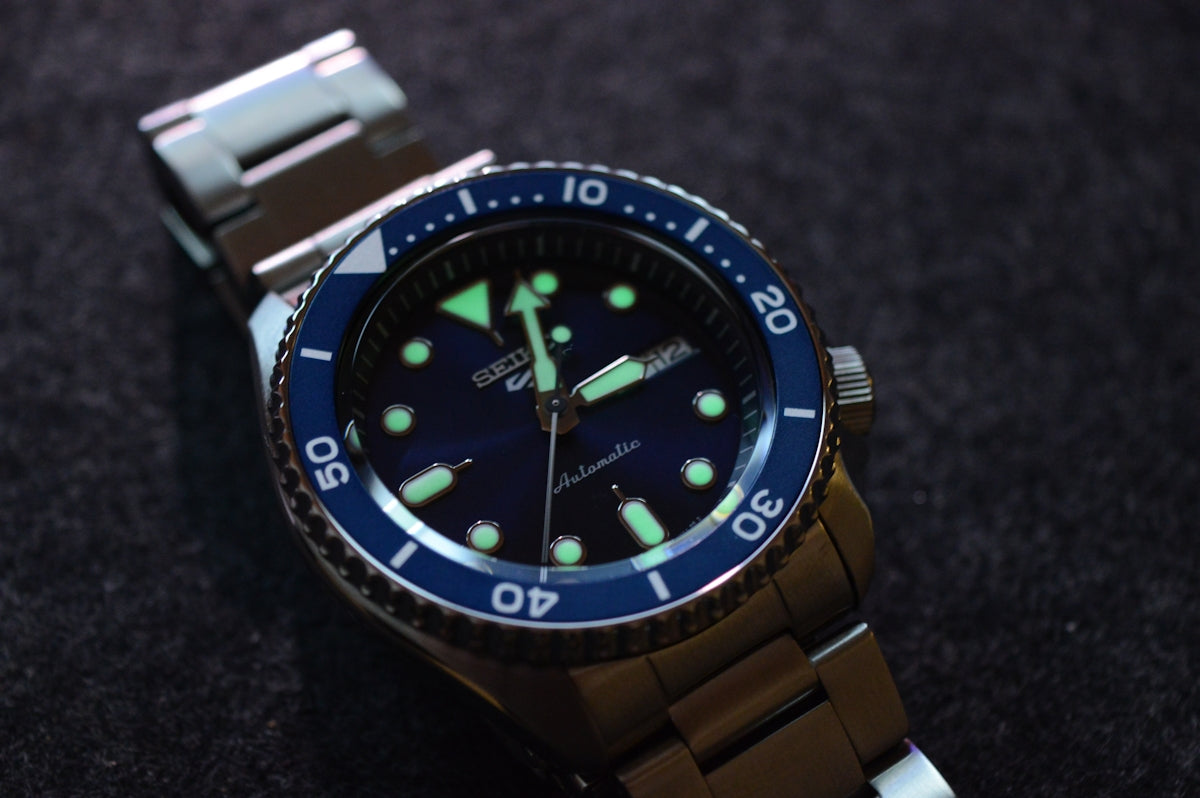
The SRPD55 "Bottle Cap" delivers dive watch styling with upgraded 4R36 movement featuring hand-winding and hacking. The 42.5mm case provides modern presence, the exhibition caseback showcases the automatic movement, and the 100m water resistance handles swimming. At $295, this represents the sweet spot between affordability and features for most beginners.
Trade-off awareness: The mineral crystal scratches within 6-12 months of daily wear. The 100m water resistance, while adequate for swimming, falls short of serious dive watch standards. The jubilee bracelet's friction clasp lacks micro-adjustment.
Best Upgraded Option: Custom Seiko Mod Watches ($250-350)
Factory Seiko watches compromise on crystals (mineral instead of sapphire) and bezels (aluminum instead of ceramic) to hit price points. The modding community addresses these limitations through custom builds that match or exceed factory specifications at similar pricing.
Why consider mods for beginners? A $295 mod watch with sapphire crystal eliminates the scratching frustration that disappoints many first-time automatic buyers. The ceramic bezel maintains color permanently versus aluminum's 3-5 year fade. Upgraded movements add features like GMT functionality (NH34) or date-only simplicity (NH38). You're getting $500-800 worth of specifications at $250-350 pricing.
Customization advantage: Can't find the exact combination you want from factory options? SKYRIM's online watch builder lets you specify every element: dial color (black, blue, white, sunburst, vintage lume), hand style (Mercedes, sword, dauphine, cathedral), bezel insert (ceramic colors, aluminum, chapter rings), crystal type (sapphire flat, domed, AR coating), and even caseback engraving for personal touches. Instead of settling for factory bundles, build exactly the watch that matches your style—a compelling option for beginners who know what they want but can't find it in standard catalogs.
Best Dress Watch: Seiko Presage Cocktail Time ($395)
If dive watch styling feels too casual for your professional environment, the Cocktail Time delivers automatic sophistication. The blue sunburst dial shifts colors in different lighting, the sapphire crystal resists scratching, and the 40.5mm sizing suits dress shirt cuffs. This proves automatic watches work beyond sports contexts.
Frequently Asked Questions
How long do automatic watches last?
With proper maintenance (service every 5-7 years), automatic watches last indefinitely—50, 100, even 150+ years. Vintage automatic watches from the 1950s remain running today after proper service. The mechanical components wear slowly and can be replaced individually. Compare this to quartz watches where circuit failure means complete movement replacement or disposal. Buy quality automatic watches and they'll outlive you.
Do automatic watches need batteries?
No—automatic watches run entirely on mechanical energy from wrist motion. No batteries, no charging, no electricity required. This independence from batteries represents one of automatic watches' primary appeals. The only "fuel" needed is regular wearing or occasional manual winding.
How accurate are automatic watches?
Most automatic watches run ±15-30 seconds per day, meaning you'll need to adjust time weekly or accept 1-2 minute variance. Premium movements (COSC-certified chronometers) run ±4-6 seconds daily. Compare this to quartz watches at ±15 seconds monthly—automatic watches are roughly 60 times less accurate. Choose automatic watches for mechanical appreciation, not precision timekeeping.
Why are automatic watches more expensive than quartz?
Automatic movements contain 100-300+ individually machined components assembled by trained watchmakers. Quartz movements contain a battery, circuit, and motor—far fewer components requiring less precision manufacturing. The mechanical complexity, skilled labor, and quality control required for automatic movements justifies premium pricing. You're paying for craftsmanship and engineering heritage, not superior timekeeping function.
Should I buy automatic or quartz for my first watch?
Buy automatic if you: appreciate mechanical craftsmanship, will wear the watch daily, enjoy the idea of battery-free operation, plan to build a watch collection, or value heirloom potential. Buy quartz if you: prioritize accurate timekeeping, want minimal maintenance, rotate between many watches, prefer lower prices, or simply need a functional timepiece without emotional attachment. Neither choice is wrong—they serve different priorities.
Conclusion: Is an Automatic Watch Right for You?
Automatic watches represent a conscious choice of mechanical tradition over electronic efficiency. They're less accurate than $20 quartz watches, require more maintenance, and stop working if you forget to wear them. By pure functional metrics, automatic watches lose to quartz alternatives at every price point.
Yet automatic watches outsell expectations because function isn't the point. The appeal comes from wearing centuries-old technology on your wrist, from the smooth sweep of a mechanical seconds hand, from knowing your timepiece runs on nothing but motion and engineering. The exhibition caseback transforms timekeeping into wearable art. The service ritual connects you to watchmakers continuing traditions spanning generations.
If these appeals resonate—if you appreciate craftsmanship over convenience, tradition over technology—automatic watches offer satisfaction quartz alternatives can't provide. Start with affordable options ($100-300) to confirm you'll actually enjoy the automatic experience before investing in premium models. The Seiko 5 series or quality mod builds deliver genuine mechanical watchmaking at prices that remove financial risk from experimentation.
If these appeals feel like marketing nonsense—if you just want accurate time without fuss—buy quartz watches without guilt. They tell time better, cost less, and require almost no maintenance. The "right" choice depends entirely on what you value in a wristwatch.
For those choosing the automatic path: welcome to a hobby spanning centuries, connecting you to watchmakers, collectors, and enthusiasts worldwide who share appreciation for mechanical timekeeping's enduring magic.
Share:
Tags:
What is a Field Watch? Definition & Complete Guide 2025
Why the Pepsi GMT Is So Popular: History & Design Explained