


Quick Answer: ETA SA is the world's largest Swiss watch movement manufacturer, owned by the Swatch Group. Their calibers power watches from brands like Tissot, Hamilton, TAG Heuer, and hundreds of independent watchmakers. The most important ETA movements to know are the ETA 2824-2 (the Swiss automatic workhorse), the ETA 2892-A2 (the thinner premium alternative), and the Valjoux 7750 (the standard Swiss chronograph).
Since 2020, ETA has been restricting supply to non-Swatch brands, making Sellita clones and Japanese alternatives increasingly important to understand.
Key Takeaways
- ETA produces over 50% of all Swiss mechanical movements. When a watch says "Swiss automatic," there's a strong chance it's ETA inside.
- The same ETA caliber comes in four grades (Standard, Elaboré, Top, Chronometer) with accuracy ranging from ±12 sec/day to COSC-certified ±4/+6 sec/day.
- ETA supply restrictions since 2020 have pushed many brands to Sellita (SW200, SW300), which are functionally identical Swiss alternatives.
- ETA-powered watches typically start at $500+. Japanese movements (Seiko NH35, Miyota 9015) offer comparable daily performance at lower price points.
If you've ever researched a Swiss watch purchase, you've encountered ETA. The company's movements sit inside everything from $500 Tissots to $3,000 TAG Heuers, and until recently, inside most "Swiss Made" watches regardless of brand. ETA is to Swiss watchmaking what Intel is to computing: the component manufacturer whose products power the entire industry.
But understanding ETA isn't straightforward. The same ETA 2824-2 caliber can be found in a $400 watch and a $2,000 watch, regulated to wildly different standards. The company is restricting supply to outside brands. Competitors like Sellita are producing near-identical alternatives. And Japanese movements offer comparable daily performance at half the price.
This guide cuts through the complexity. You'll learn what makes each major ETA caliber different, what the four quality grades actually mean for your experience, and whether Swiss movements are worth the premium over Japanese alternatives.

What Is an ETA Movement?
ETA SA Manufacture Horlogère Suisse is a Swiss movement manufacturer headquartered in Grenchen, Switzerland. It's a subsidiary of the Swatch Group, the world's largest watch conglomerate (owner of Omega, Longines, Tissot, Hamilton, Breguet, and others).
ETA's significance is hard to overstate. At its peak, the company supplied mechanical movements to an estimated 50-60% of all Swiss watch brands. Independent brands that didn't manufacture their own calibers, which is the vast majority, relied on ETA for the beating heart of their watches.
ETA sells movements in two forms. Complete movements are ready to install, adjusted and regulated. Ébauches (partially assembled kits) allow brands to finish, regulate, and sometimes modify the movement themselves, which is how some brands can claim "in-house finishing" on what is fundamentally an ETA platform.
Swatch Group Brands (In-House ETA Access)
Omega, Longines, Tissot, Hamilton, Mido, Certina, Rado, Breguet, Blancpain, Harry Winston, Balmain, Swatch
Notable External Brands (Historically ETA-Dependent)
TAG Heuer (now LVMH), Tudor, Bell & Ross, Oris, Bremont, Christopher Ward, and hundreds of smaller Swiss brands
ETA Movement Grades Explained: Standard, Elaboré, Top, and Chronometer
This is the most important and most misunderstood aspect of ETA movements. The same caliber (for example, the ETA 2824-2) is available in four different quality grades. Each grade receives progressively more regulation, adjustment, and finishing. The difference between the cheapest and most expensive grade of the same movement can be $200+ in component cost alone.
| Grade | Accuracy | Regulation Positions | Finishing | Typical Watch Price |
|---|---|---|---|---|
| Standard | ±12 sec/day | 2 positions | Basic, machine-finished | $300-600 |
| Elaboré | ±7 sec/day | 3 positions | Improved, better rotor | $500-1,500 |
| Top | ±4 sec/day | 5 positions | Fine finishing, blued screws | $1,000-3,000 |
| Chronometer (COSC) | -4/+6 sec/day | 5 positions + COSC tested | High-grade, individual cert. | $1,500+ |
What the Grades Actually Mean for Daily Wear
A Standard grade ETA 2824-2 might gain or lose up to 12 seconds per day. Over a week, that's potentially 84 seconds of drift. You'll need to adjust the time every week or two. This is the grade found in most watches under $600.
An Elaboré grade cuts that nearly in half. At ±7 seconds per day, you might go two to three weeks before noticing meaningful drift. This is the most common grade in mid-range Swiss watches ($500-1,500).
Top grade achieves ±4 seconds per day, regulated in five positions (dial up, dial down, crown up, crown down, crown left). At this level, the watch may only drift 30 seconds over a week. You'll rarely need to adjust it.
Chronometer grade meets COSC (Contrôle Officiel Suisse des Chronomètres) certification standards. Each individual movement is tested over 15 days in five positions at three temperatures. You receive a certificate confirming your specific movement's performance.
What Brands Don't Always Tell You
Most brands don't advertise which ETA grade they use. A $1,200 watch might use a Standard grade ETA 2824-2 with premium case finishing, while a $800 watch from another brand might use an Elaboré grade. The external quality of the watch (case, crystal, bracelet) doesn't always correlate with the internal movement grade. If accuracy matters to you, ask the brand directly which grade they specify.
Most Popular ETA Calibers: The Movements You'll Actually Encounter
ETA 2824-2: The Swiss Workhorse
MOST COMMONIf there's one ETA movement everyone should know, it's the 2824-2. This is the default Swiss automatic caliber. It's been in production for decades, refined through countless iterations, and can be found in watches from Tissot to Tudor (before Tudor developed their own calibers). Its ubiquity is its greatest strength: any qualified watchmaker on the planet can service it, parts are readily available, and its behavior is well understood.
ETA 2892-A2: The Thinner Premium Choice
PREMIUMThe 2892-A2 is the refined sibling of the 2824. At just 3.6mm thick (a full millimeter thinner), it allows watchmakers to build slimmer cases, which is essential for elegant dress watches. It's also a more versatile platform: many brands use the 2892 as a base for adding additional modules (GMT functions, power reserve indicators, moonphases) because its thinner profile leaves room for complications on top.
Valjoux 7750 (ETA 7750): The Swiss Chronograph Standard
CHRONOGRAPHThe Valjoux 7750 is to Swiss chronographs what the 2824 is to Swiss automatics: the industry default. Introduced in 1974, it uses a cam-actuated chronograph mechanism (as opposed to the more expensive column-wheel design). It's thick at 7.9mm, which is why most Swiss automatic chronographs are noticeably bulkier than their time-only counterparts. But its reliability over nearly five decades of production has made it the caliber most watchmakers trust for chronograph builds.
ETA 6497 / 6498: Hand-Wound Simplicity
HAND-WOUNDThese large-diameter hand-wound calibers descend from pocket watch movements. The 6497 has a small seconds sub-dial at 9 o'clock; the 6498 places it at 6 o'clock. Their size (36.6mm diameter) makes them ideal for large pilot watches and marine-style timepieces. The manual winding ritual appeals to purists who enjoy the daily interaction with their watch. Simple construction means reliable performance and straightforward servicing.
ETA Caliber Comparison at a Glance
| Caliber | Type | Thickness | Power Reserve | Best Known For |
|---|---|---|---|---|
| ETA 2824-2 | Automatic | 4.6mm | 38 hours | The industry standard |
| ETA 2892-A2 | Automatic | 3.6mm | 42 hours | Thin cases, modular base |
| Valjoux 7750 | Auto chronograph | 7.9mm | 46 hours | Swiss chronograph default |
| ETA 6497/6498 | Hand-wound | 4.5mm | 46 hours | Pilot and marine watches |
ETA Supply Restrictions: What Changed and Why It Matters
In 2013, the Swiss Competition Commission (COMCO) ruled that ETA must continue supplying movements to third-party brands, but allowed a gradual reduction in volume. By 2020, ETA began significantly curtailing supply to non-Swatch Group brands. This has been the single most disruptive event in Swiss watchmaking supply chains in decades.
What This Means for Watch Brands
Brands that relied on ETA for decades suddenly needed to find alternatives. Some developed in-house movements (expensive, years-long process). Some switched to Sellita, the most direct ETA alternative. Others turned to Japanese movements like Miyota. A few smaller brands simply couldn't adapt and disappeared.
What This Means for Watch Buyers
You may notice brands that previously advertised "ETA 2824-2" now simply say "Swiss automatic movement" without specifying the caliber. In many cases, they've switched to a Sellita SW200-1 (which is functionally identical) but avoid naming it because ETA carries more brand recognition.
Movement costs have also increased across the board. When ETA was the dominant, easily-sourced option, competition kept prices reasonable. With restricted supply, the remaining alternatives (Sellita, Soprod, Miyota) have gained pricing power. These costs are passed to consumers.
How to Tell If a Brand Switched from ETA
If a brand's older models say "ETA 2824-2" and newer models say "Swiss automatic movement" or "Caliber [brand prefix]-200," they've likely switched to Sellita. This isn't a downgrade. The SW200 is a perfectly capable Swiss movement. But the lack of transparency can feel misleading to informed buyers.
ETA vs Sellita Movements: Are the Alternatives Just as Good?
Sellita Watch Co. is a Swiss movement manufacturer founded in 1950. They produce calibers that are dimensionally and functionally equivalent to ETA's most popular movements. This isn't counterfeiting or reverse engineering. Sellita manufactures their own components to the same Swiss specifications, and they've been doing it for decades.
| ETA Caliber | Sellita Equivalent | Key Difference |
|---|---|---|
| ETA 2824-2 | Sellita SW200-1 | Minor rotor bearing design |
| ETA 2892-A2 | Sellita SW300-1 | Nearly identical |
| ETA 2836-2 | Sellita SW220-1 | Day-date version, nearly identical |
| Valjoux 7750 | Sellita SW500 | Same architecture, fewer years of field data |
The Honest Assessment
For everyday wear, a Sellita SW200 and an ETA 2824-2 deliver an indistinguishable experience. Same accuracy range, same power reserve, same winding feel, same visual appearance through a caseback. Most parts are even interchangeable, meaning a watchmaker can service either with the same tools and components.
Where ETA holds an edge is in decades of field data. The 2824-2 has been produced in the millions over 40+ years. Every possible failure mode has been identified and addressed. Sellita's SW200, while proven, has a shorter track record. For most buyers, this difference is academic. For collectors buying watches they plan to keep for 30+ years, some prefer the longer-established caliber.
ETA vs Japanese Movements: Swiss Calibers Compared to Seiko and Miyota
This is the value question that matters most to buyers. Swiss ETA movements carry prestige and the "Swiss Made" label. Japanese movements from Seiko and Miyota offer competitive performance at significantly lower price points. Understanding what you're actually paying for helps make a smarter purchase decision.
| Specification | ETA 2824-2 | Seiko NH35 | Miyota 9015 |
|---|---|---|---|
| Origin | Switzerland | Japan | Japan (Citizen) |
| Accuracy | ±12 sec/day (Standard) | ±20 sec/day | ±10 sec/day |
| Power Reserve | 38 hours | 41 hours | 42 hours |
| Hacking | Yes | Yes | Yes |
| Hand-Winding | Yes | Yes | Yes |
| Service Cost | $200-400 | $50-100 | $80-150 |
| Typical Watch Price | $500-2,000+ | $100-400 | $200-800 |
What You're Actually Paying For
The performance gap between ETA Standard grade and Japanese movements is smaller than most people assume. The Miyota 9015 actually matches or beats the ETA 2824-2 Standard in accuracy (±10 vs ±12 sec/day), and both Japanese calibers offer longer power reserves.
What ETA provides beyond specifications is the "Swiss Made" designation, which allows the finished watch to carry the Swiss Made label (provided other criteria are met). For many buyers, this label carries real value in terms of perceived quality, resale value, and social signaling. For others, it's a premium paid for geography rather than performance.
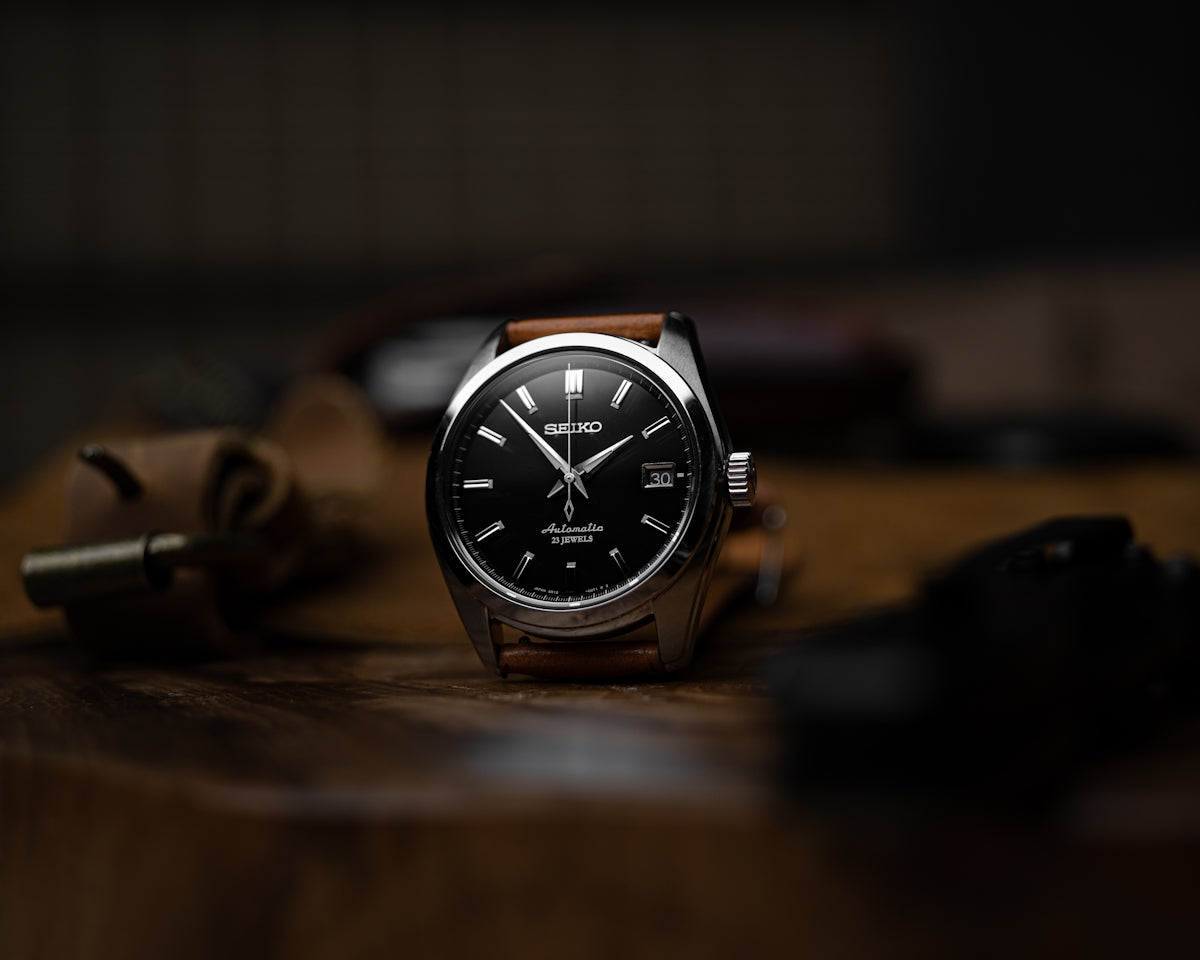
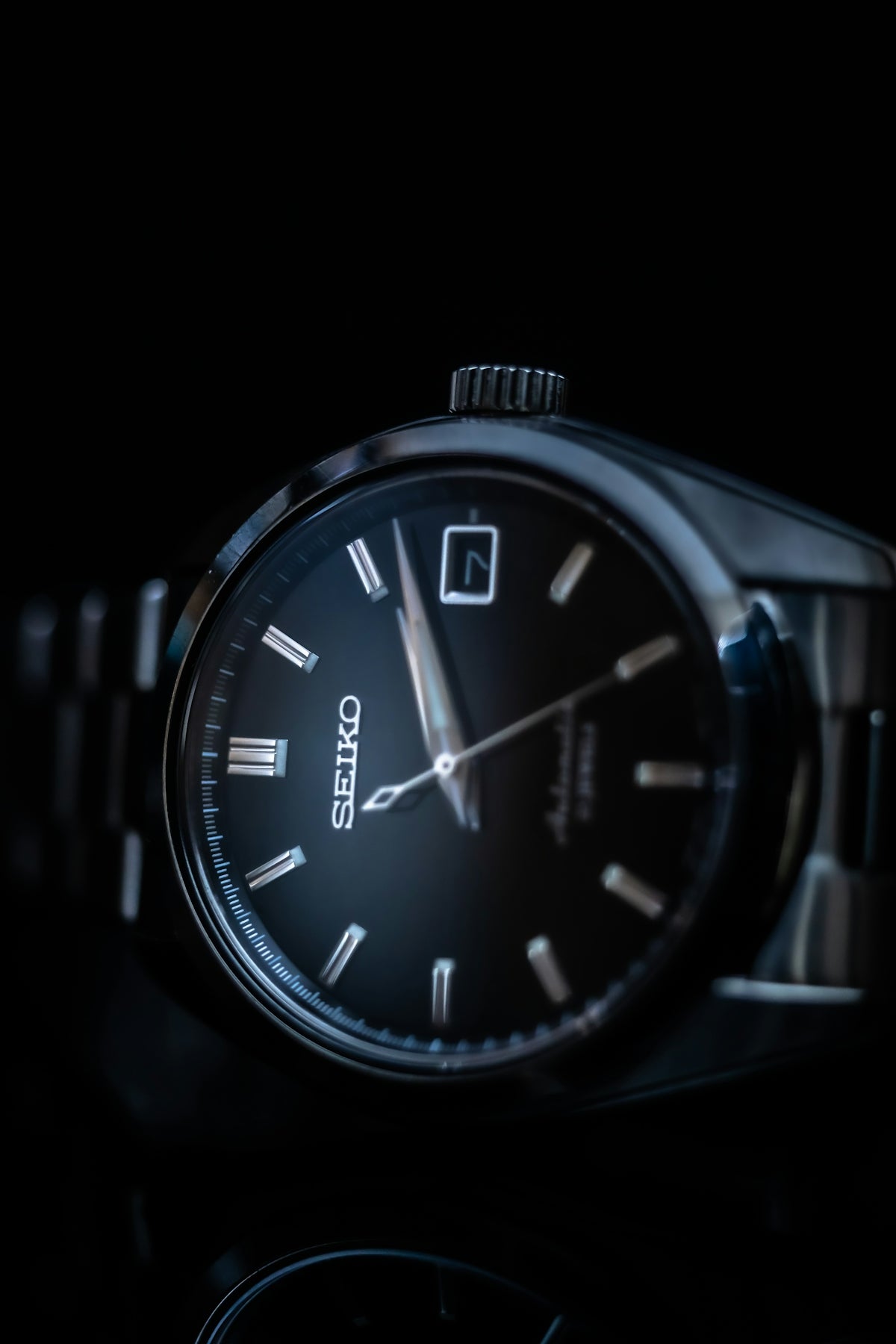
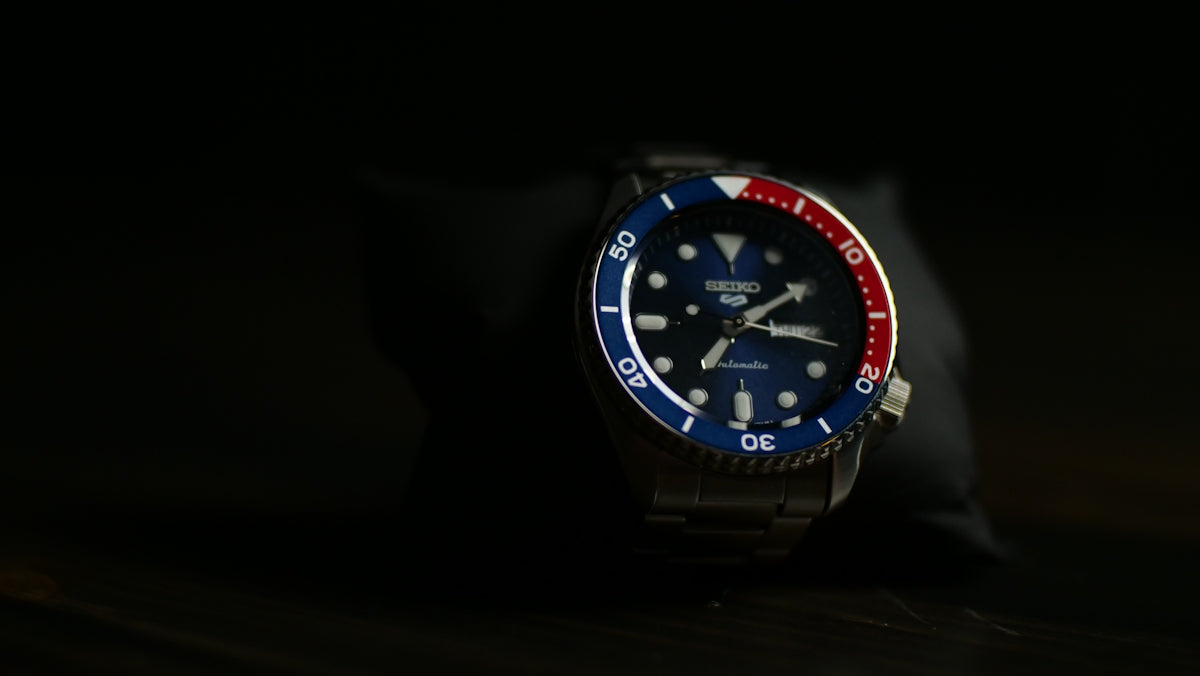
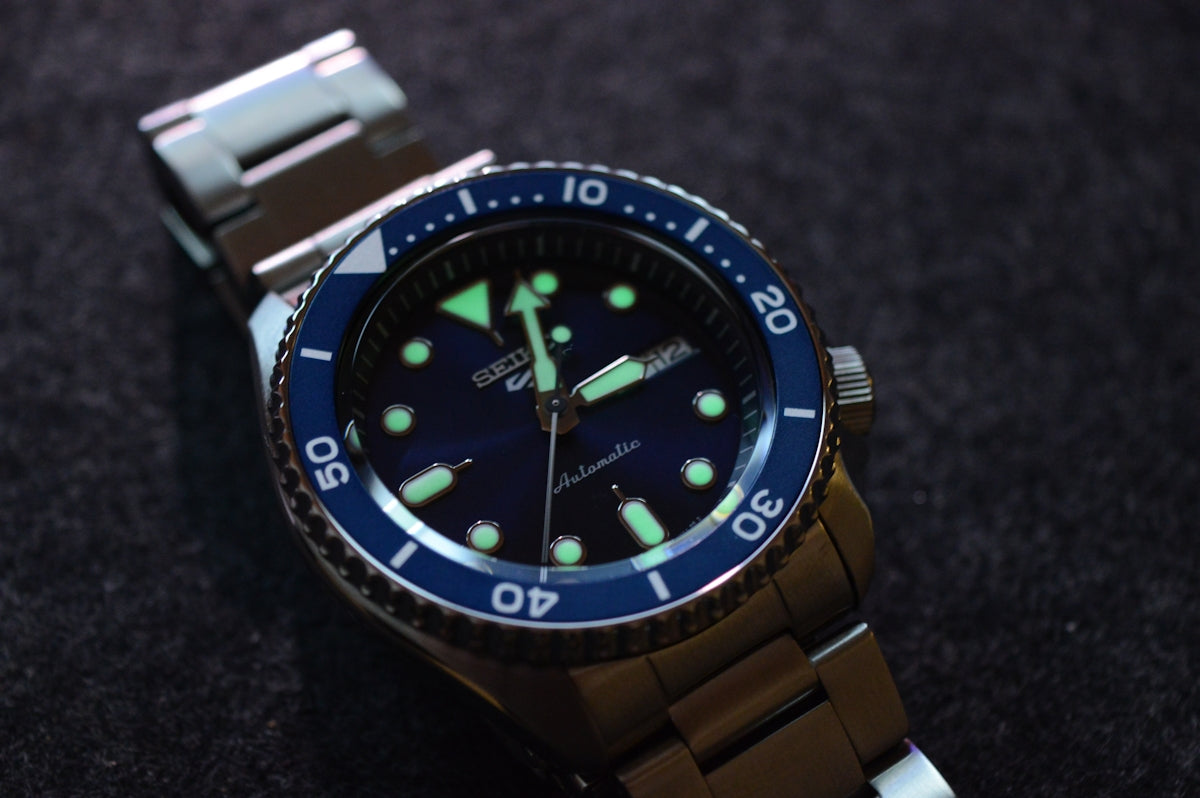
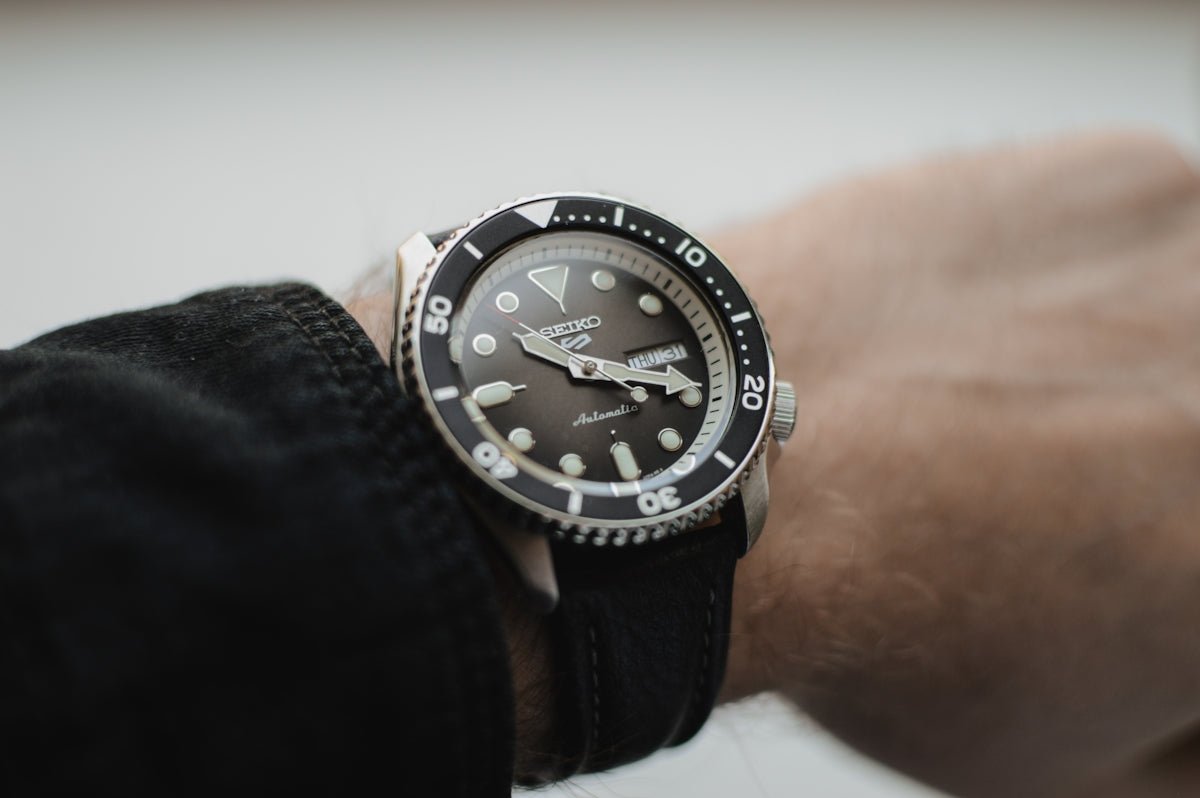
Japanese movements have their own strengths. The Seiko NH35 powers watches across the modification community and brands like SKYRIM, which hand-assembles watches with genuine Seiko movements in the USA at $269-$345. The Miyota 9015 is a favorite of microbrands wanting better accuracy than Seiko at a lower cost than ETA. Both are proven over decades of production and millions of units.
The Practical Perspective
If you're choosing between a $500 ETA-powered watch and a $300 Japanese-powered watch, the ETA doesn't keep better time, last longer, or require less maintenance. You're paying for the Swiss heritage, the label, and potentially better finishing on the movement itself. Whether that's worth $200 is a personal decision, not a performance one.
How to Identify Which ETA Movement Is in Your Watch
Not all brands advertise their movement source. Here are four reliable methods to identify what's inside your watch:
1. Check the Brand's Spec Sheet
Reputable brands list the caliber on their product pages or in the included documentation. Look for "Caliber," "Movement," or "Calibre" in the specifications. If it says "Swiss automatic" without a specific reference, the brand may be deliberately vague.
2. Look Through the Caseback
If your watch has a transparent caseback, the movement may have identifying markings. ETA movements typically have "ETA" and the caliber number engraved on the rotor or main plate. Sellita movements will show "Sellita" or "SW" markings.
3. Decode the Brand's Caliber Name
Many brands rename ETA calibers with their own designations. If a brand calls it "Caliber [Brand]-80," the "80" often hints at an 80-hour power reserve modification of a base ETA/Sellita. Online databases like Caliber Corner can decode these.
4. Ask the Brand Directly
If specifications are unclear, email customer service and ask which movement caliber is used, and what grade (Standard, Elaboré, Top). Brands that take pride in their movements will answer readily. Brands that are evasive may have something to be vague about.
Are ETA Movements Worth the Premium?
ETA movements are worth the premium if the "Swiss Made" designation matters to you, whether for personal satisfaction, professional image, or resale value. ETA calibers also benefit from the largest global service network of any mechanical movement family. Any certified watchmaker, anywhere in the world, can service an ETA 2824-2 with readily available parts.
ETA movements are not worth the premium if you're optimizing for pure performance per dollar. Japanese calibers deliver equivalent or better daily accuracy, longer power reserves, and dramatically lower servicing costs. The gap between a Standard-grade ETA 2824-2 and a Seiko NH35 is narrower than the price difference suggests.
The honest answer depends on what kind of watch buyer you are. If you see a watch as Swiss heritage, craftsmanship, and tradition, ETA is the right foundation. If you see a watch as a precision instrument that should deliver maximum value, the Japanese alternatives make a stronger case.
Frequently Asked Questions
Explore More Watch Guides
Learn about movements, complications, and finding the right watch
In-depth guides from industry professionals
Related Reading
Share:
Tags:
10 Best Automatic Watch Movements: Complete Ranking Guide
How to Choose a Seiko Mod Watch for Women