


Quick Answer: These three terms describe different things. Quartz and automatic refer to how a watch is powered (battery vs mechanical self-winding). Chronograph describes a function (stopwatch capability). You can have a quartz chronograph, an automatic chronograph, or simple three-hand versions of either power source.
This confusion is common among watch buyers. Understanding the distinction helps you ask the right questions: Do you want battery power or mechanical movement? Do you need timing functionality? This guide explains each concept and helps you choose the combination that fits your lifestyle.

Understanding the Terminology
Before comparing these watch types, understanding what each term actually describes prevents confusion when shopping.
Power Source vs Function
Quartz and Automatic describe how a watch gets its power—the engine that drives the hands. These are movement types, the mechanism inside the case.
Chronograph describes what a watch can do—specifically, its ability to measure elapsed time with start/stop/reset functionality. This is a complication, an additional feature beyond basic timekeeping.
Think of it like cars: "gasoline" and "electric" describe the power source; "convertible" describes a feature. You can have a gasoline convertible or an electric convertible. Similarly, you can have a quartz chronograph or an automatic chronograph.
The Four Common Combinations
| Combination | Power Source | Function | Example |
|---|---|---|---|
| Quartz Three-Hand | Battery | Time only | Casio, basic Seiko |
| Quartz Chronograph | Battery | Time + stopwatch | Tissot PRX Chrono |
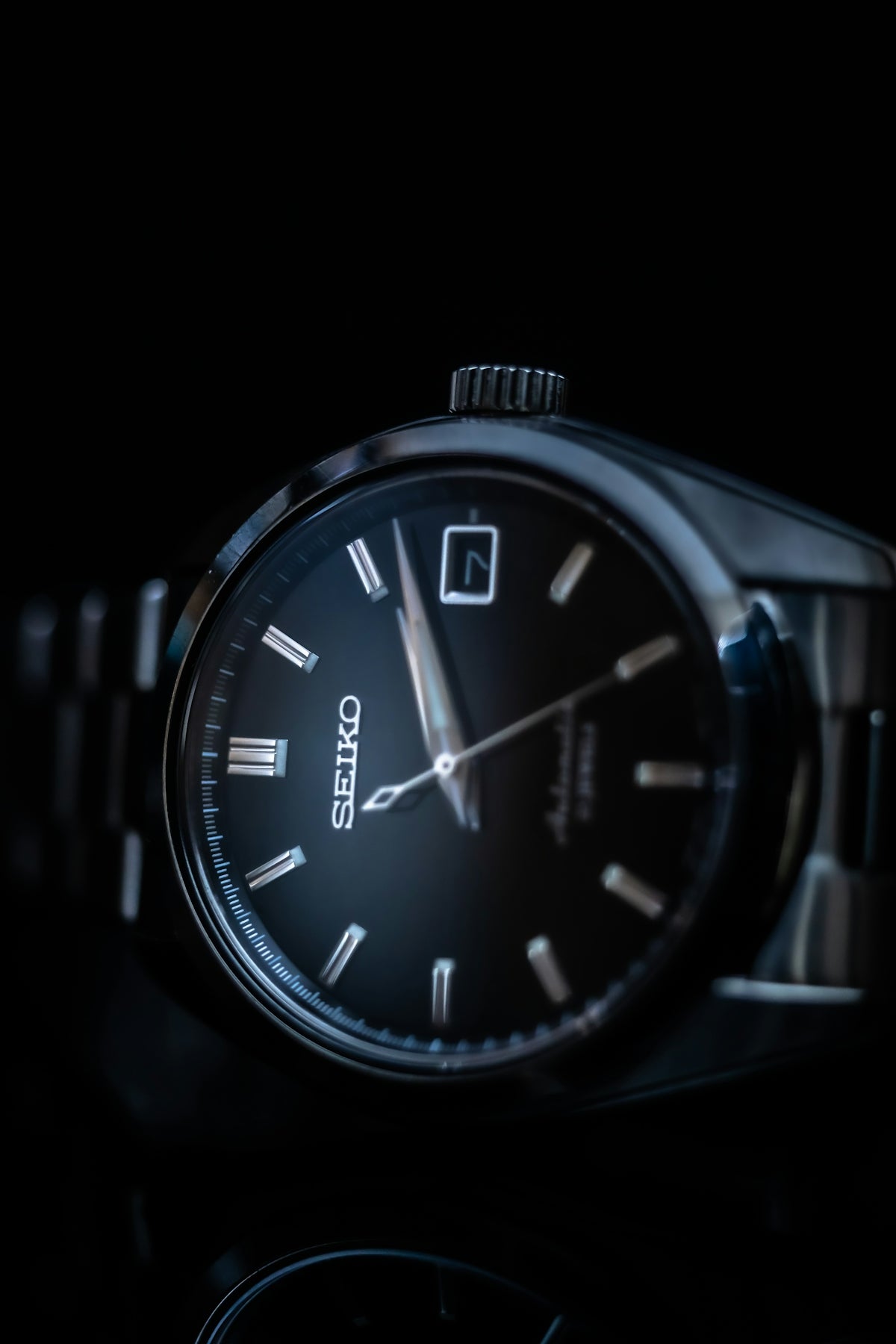
| Automatic Three-Hand | Mechanical self-wind | Time only | Seiko Presage, Orient Bambino |
| Automatic Chronograph | Mechanical self-wind | Time + stopwatch | Omega Speedmaster, Tudor Black Bay Chrono |
Quartz Watches Explained
Quartz watches use battery power and a quartz crystal oscillator to keep time. The battery sends electrical current through the crystal, which vibrates at exactly 32,768 times per second. Electronic circuits count these vibrations and move the hands accordingly.

How Quartz Works
A quartz movement contains few moving parts compared to mechanical alternatives. The battery provides consistent power, the quartz crystal regulates timing, and a stepper motor advances the hands. This simplicity translates to reliability and accuracy.
The quartz crystal's precise vibration frequency means quartz watches lose or gain only 10-20 seconds per month—roughly 100 times more accurate than mechanical movements. High-end quartz movements (like Bulova Precisionist or Grand Seiko 9F) achieve accuracy within 10 seconds per year.
Quartz Advantages
- Superior accuracy: ±15 seconds per month vs ±15 seconds per day for mechanical
- Low maintenance: Battery replacement every 2-3 years ($20-50)
- Affordable entry: Quality quartz watches start under $100
- Thin cases: No rotor mechanism allows slimmer profiles
- Always running: Keeps time whether worn or not
Quartz Disadvantages
- Battery dependency: Eventually dies, requiring replacement
- Ticking seconds hand: Moves in 1-second jumps (not smooth sweep)
- Less collectible: Generally lower resale value than mechanical
- Perceived as less "authentic": Watch enthusiasts often prefer mechanical
Best For
Quartz watches suit buyers who prioritize accuracy, low maintenance, and value. If you want a watch that keeps perfect time without regular attention, quartz delivers. Professionals needing reliable timekeeping—pilots, medical staff, anyone syncing to schedules—benefit from quartz precision.

Automatic Watches Explained
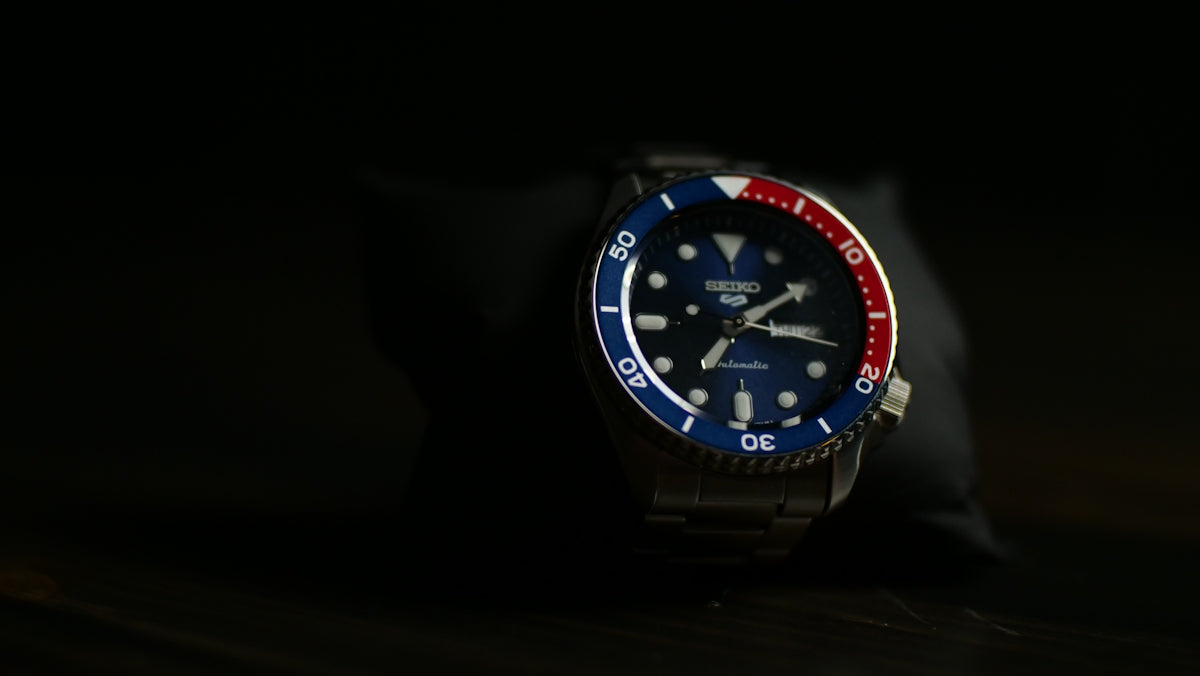
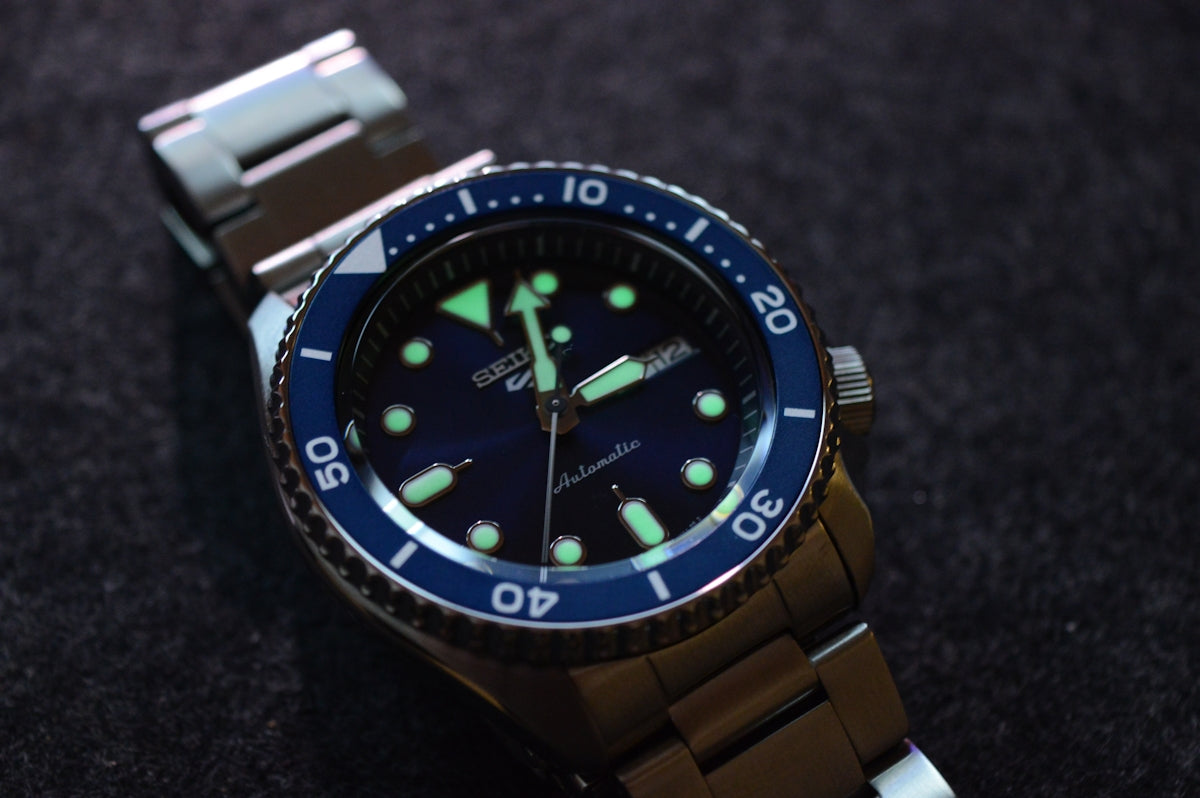
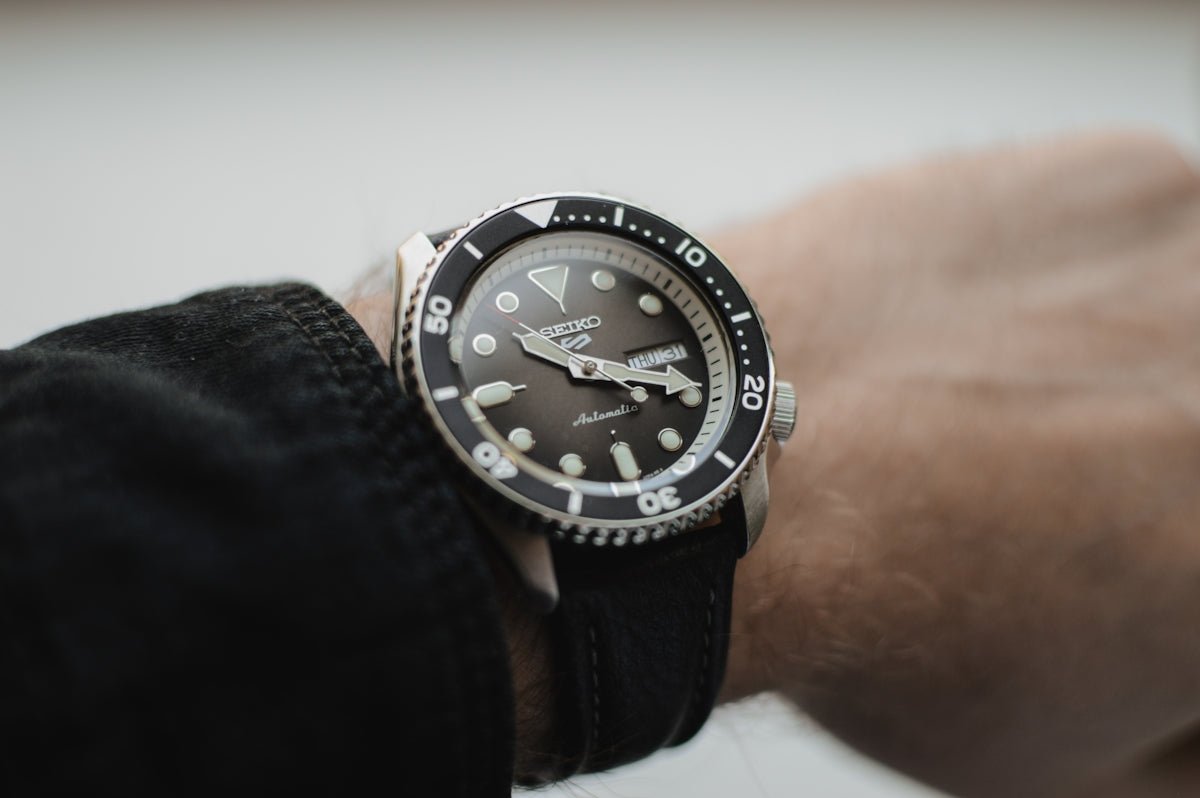
Automatic watches are mechanical timepieces that wind themselves through wrist movement. A weighted rotor spins as you move, transferring energy to the mainspring. This stored mechanical energy powers the watch without batteries or manual winding.
How Automatic Works
The rotor—a semicircular weight visible through exhibition casebacks—rotates freely on a central bearing. As your wrist moves throughout the day, gravity pulls the rotor, causing it to spin. Gears transfer this rotation to the mainspring, coiling it tighter and storing energy.
When fully wound, most automatic movements provide 40-70 hours of power reserve. The Seiko NH35—found in watches from entry-level Seikos to hand-assembled builds like SKYRIM's collection—delivers 41 hours of reserve, meaning your watch keeps running through a weekend off-wrist.
Automatic Advantages
- No battery required: Powers itself through wrist motion
- Mechanical craftsmanship: Hundreds of components working in harmony
- Sweeping seconds hand: Smooth motion (6-10 beats per second)
- Longevity: Can last generations with proper service
- Collectibility: Better value retention than quartz
Automatic Disadvantages
- Lower accuracy: ±10-30 seconds per day when properly regulated
- Higher maintenance: Service every 5-7 years ($150-500)
- Stops when unworn: Requires resetting after 40-70 hours off-wrist
- Thicker cases: Rotor mechanism adds height (typically 10-15mm)
- Higher cost: Quality automatic movements start around $150+
Best For
Automatic watches suit buyers who appreciate mechanical engineering, wear watches daily, and value the ritual of owning a "living" timepiece. If you enjoy the idea of wearing a tiny mechanical engine on your wrist—powered by your own movement—automatic provides that connection. Collectors and enthusiasts typically prefer automatic for the craftsmanship and heritage.

Chronograph Watches Explained
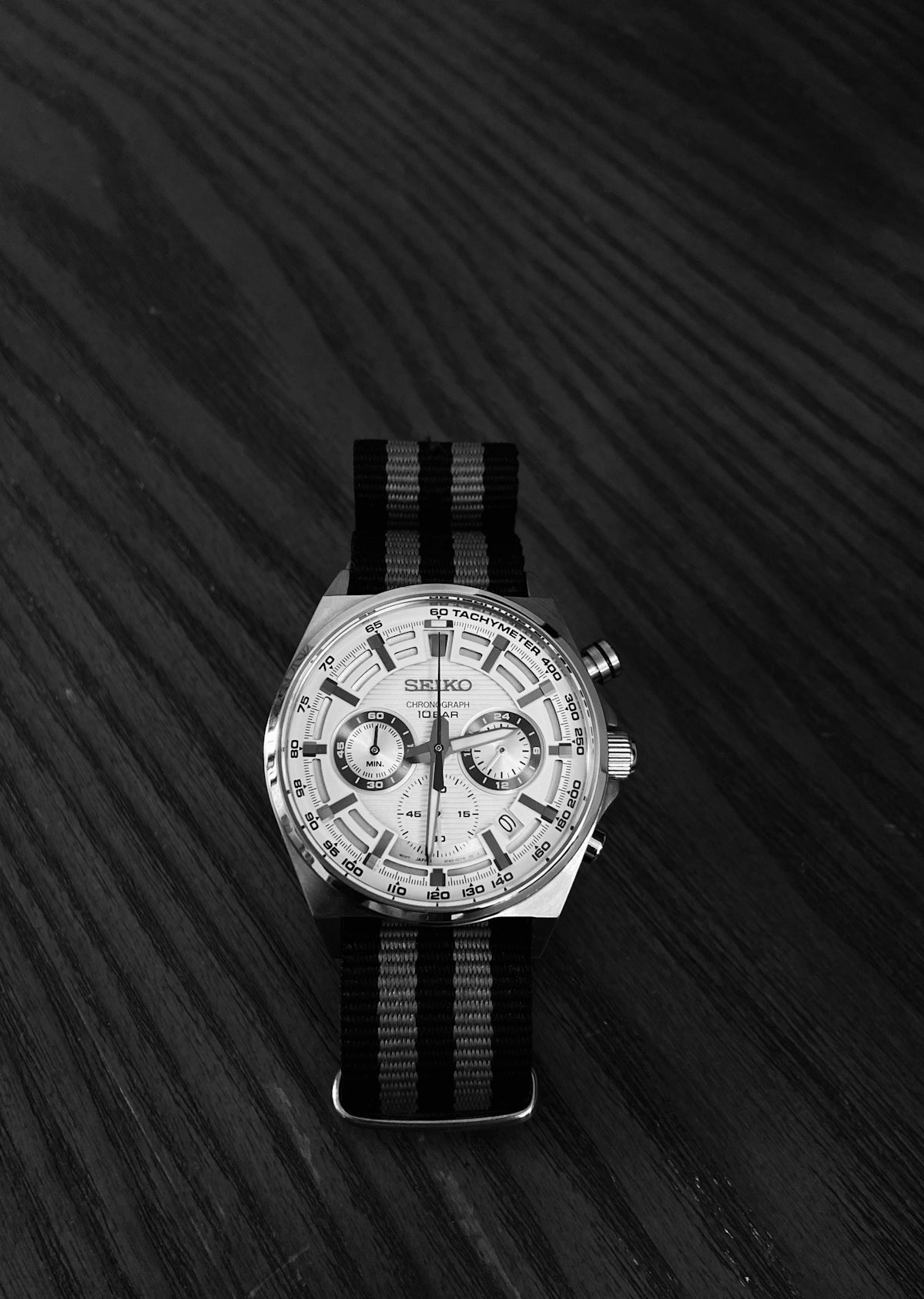
A chronograph is a watch with stopwatch functionality—the ability to measure elapsed time independently of regular timekeeping. Chronographs feature pushers (buttons) on the case side to start, stop, and reset the timing function, plus subdials displaying elapsed seconds, minutes, and sometimes hours.
How Chronographs Work
When you press the top pusher, the chronograph starts counting. A separate seconds hand (usually in the center) begins sweeping, while subdials track accumulated minutes and hours. Press again to stop, and the lower pusher resets everything to zero.
This timing function operates independently from regular timekeeping. Your watch continues showing the correct time while the chronograph measures whatever you're timing—laps, cooking, parking meters, or anything else requiring precise duration measurement.
Chronograph Power Sources
Here's where the terminology connects: chronographs can use either power source.
Quartz Chronograph: Battery-powered with electronic chronograph switching. Advantages include instant reset, precise 1/10-second (or better) timing, and lower cost. The chronograph function adds minimal complexity since electronics handle timing.
Meca-Quartz Chronograph: A hybrid approach combining quartz timekeeping with mechanical chronograph module. The Seiko VK63—used in watches like SKYRIM's Daytona and Speedmaster builds—delivers quartz accuracy with tactile mechanical pushers and instant reset. This bridges the gap between pure quartz and mechanical chronographs.
Automatic Chronograph: Fully mechanical with self-winding and mechanical chronograph mechanism. More complex (and expensive) than non-chronograph automatics. The chronograph adds 50-100+ components to an already intricate movement. Prices typically start around $500 and reach five figures for Swiss manufacture calibers.
Best For
Chronographs suit anyone who actually times things—workouts, cooking, meetings, track laps. They also appeal to those who appreciate the aesthetic: subdials, tachymeter bezels, and pusher buttons create visual complexity that simple three-hand watches lack. Racing enthusiasts particularly gravitate toward chronographs for their motorsport heritage.
Quick Comparison Table
This table compares all three concepts across key dimensions:
| Dimension | Quartz | Automatic | Chronograph |
|---|---|---|---|
| What It Is | Power source (battery) | Power source (mechanical) | Function (stopwatch) |
| Accuracy | ±15 sec/month | ±15-30 sec/day | Depends on movement |
| Maintenance | Battery every 2-3 years | Service every 5-7 years | +20-40% vs non-chrono |
| Typical Thickness | 6-10mm | 10-15mm | +2-4mm vs non-chrono |
| Entry Price | $50+ | $150+ | +$50-200 vs base |
| Power Reserve | 2-3 years (battery) | 40-70 hours | N/A (it's a function) |
| Seconds Hand | Ticks (1/sec) | Sweeps (6-10/sec) | Additional chrono hand |
How to Choose: Decision Framework
Use these questions to identify which combination fits your needs:
Question 1: Do You Need Stopwatch Functionality?
Yes → Consider a chronograph
- You time workouts, cooking, or activities regularly
- You want the visual complexity of subdials
- Racing or motorsport aesthetics appeal to you
No → A three-hand watch suffices
- You only need to tell time
- You prefer cleaner, simpler dials
- Thinner cases matter to you
Question 2: How Important Is Accuracy?
Very important → Choose quartz
- You sync to tight schedules
- Being off by 30 seconds daily bothers you
- You rarely adjust your watch
Accuracy is secondary → Automatic works fine
- ±20 seconds per day doesn't affect your life
- You're willing to adjust time weekly
- Mechanical craftsmanship matters more than precision
Question 3: What's Your Wearing Pattern?
Daily wear (same watch every day) → Automatic thrives
- Regular wrist motion keeps it wound
- You'll bond with one watch over time
Rotating collection or occasional wear → Quartz is practical
- Quartz keeps running in your drawer
- No resetting needed when you pick it up
Question 4: What's Your Budget?
| Budget | Best Option | Example |
|---|---|---|
| Under $200 | Quartz (chrono or simple) | Timex, Citizen Eco-Drive |
| $200-$400 | Automatic simple or meca-quartz chrono | Orient, Seiko Presage, SKYRIM chronographs |
| $400-$1,000 | Swiss quartz chrono or automatic simple | Tissot PRX, Hamilton, Longines |
| $1,000+ | Automatic chronograph | Tudor, Omega, Breitling |
Common Combinations Explained
Now that you understand the terminology, here's how these concepts combine in real watches:
Quartz Three-Hand (Simple Quartz)
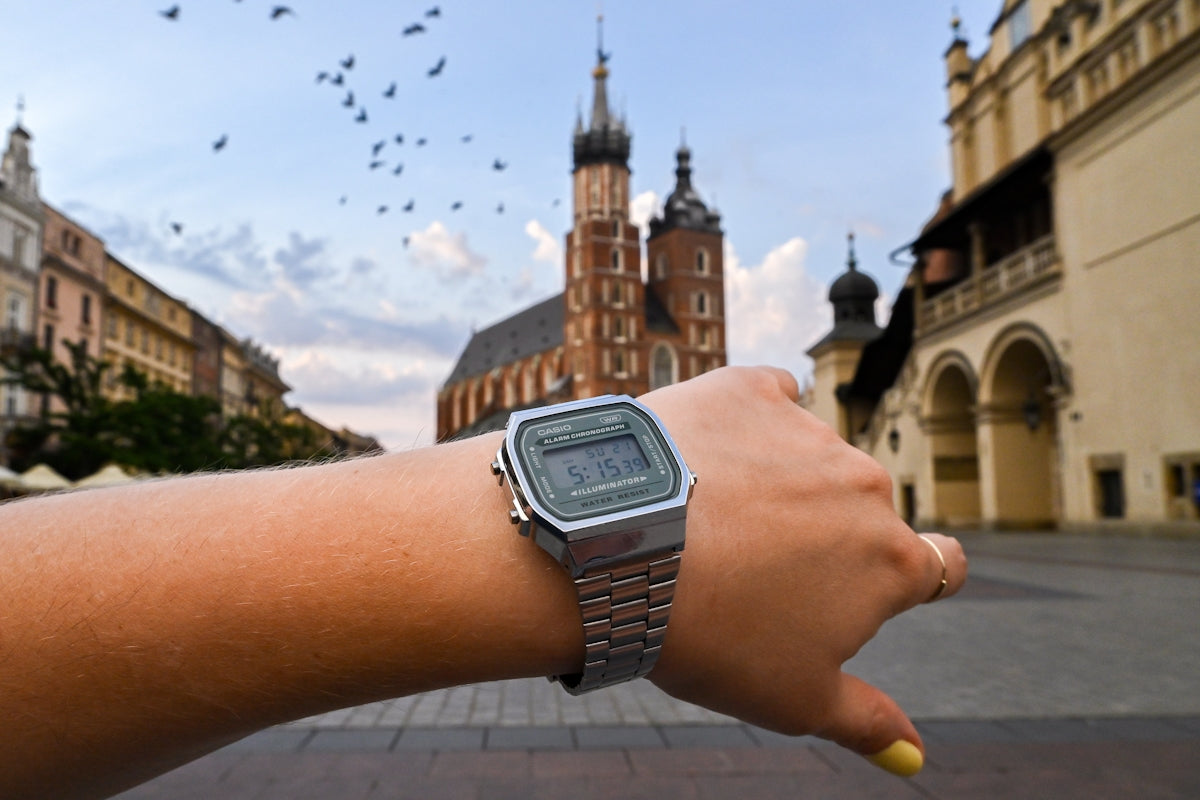
Battery-powered with hour, minute, and seconds hands only. Often includes date window. This is the most common watch type globally—reliable, affordable, accurate. Examples: Casio, Timex Weekender, Citizen Eco-Drive basics.
Choose if: You want accurate time without fuss, prioritize value, or need a beater watch.
Quartz Chronograph
Battery-powered with stopwatch functionality. Electronic switching provides instant reset and precise timing. Typically thinner than automatic chronographs. Examples: Tissot PRX Chronograph, Bulova Lunar Pilot.
Choose if: You want chronograph functionality with quartz accuracy and lower maintenance.
Meca-Quartz Chronograph
Hybrid movement: quartz timekeeping with mechanical chronograph module. Delivers tactile pusher feel and sweeping chronograph seconds hand—closer to mechanical experience—with quartz reliability. The Seiko VK63 powers watches like SKYRIM's Daytona Panda ($285) and Speedmaster Racing ($399), combining 904L steel and sapphire crystal with meca-quartz convenience.
Choose if: You want mechanical chronograph feel without mechanical chronograph price and maintenance.
Automatic Three-Hand (Simple Automatic)
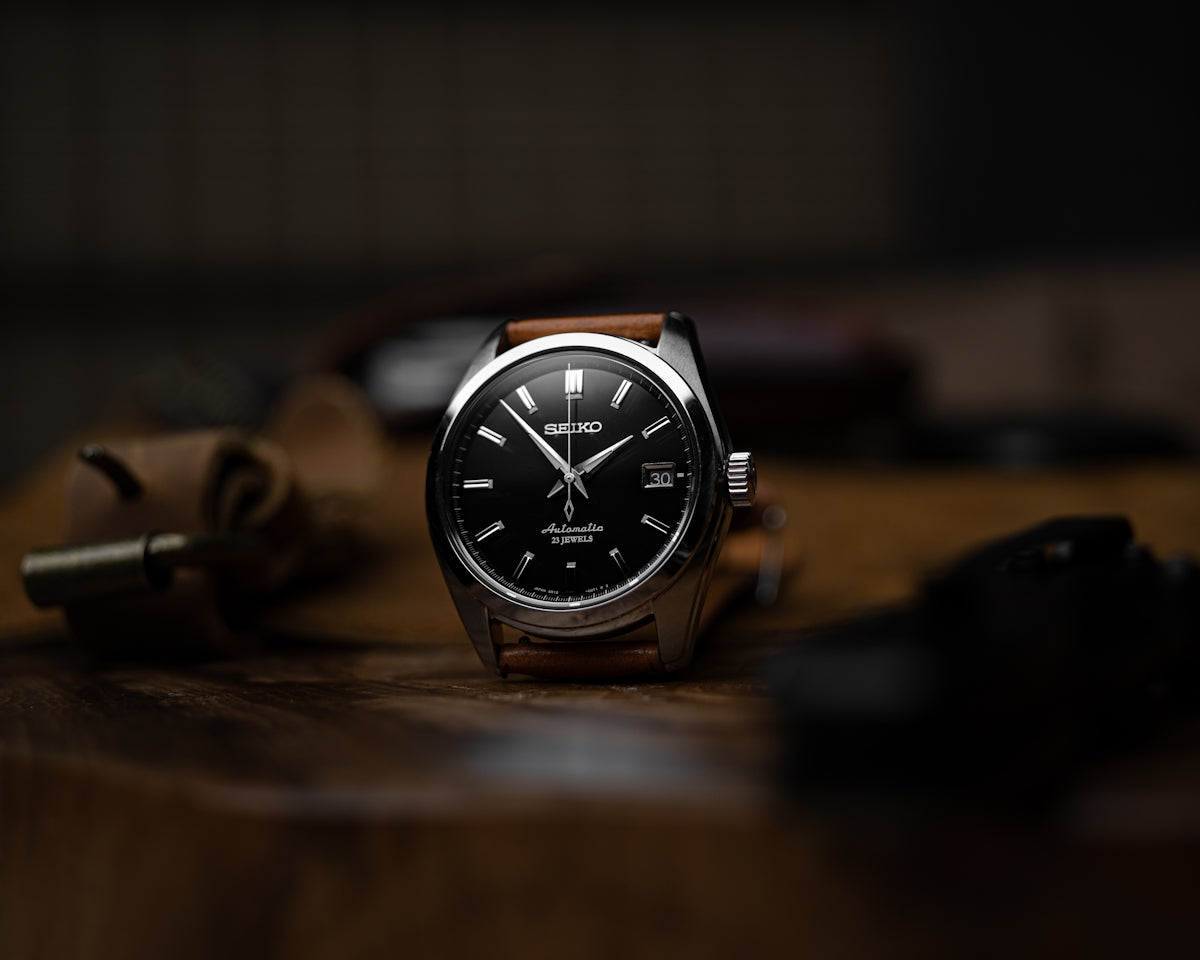
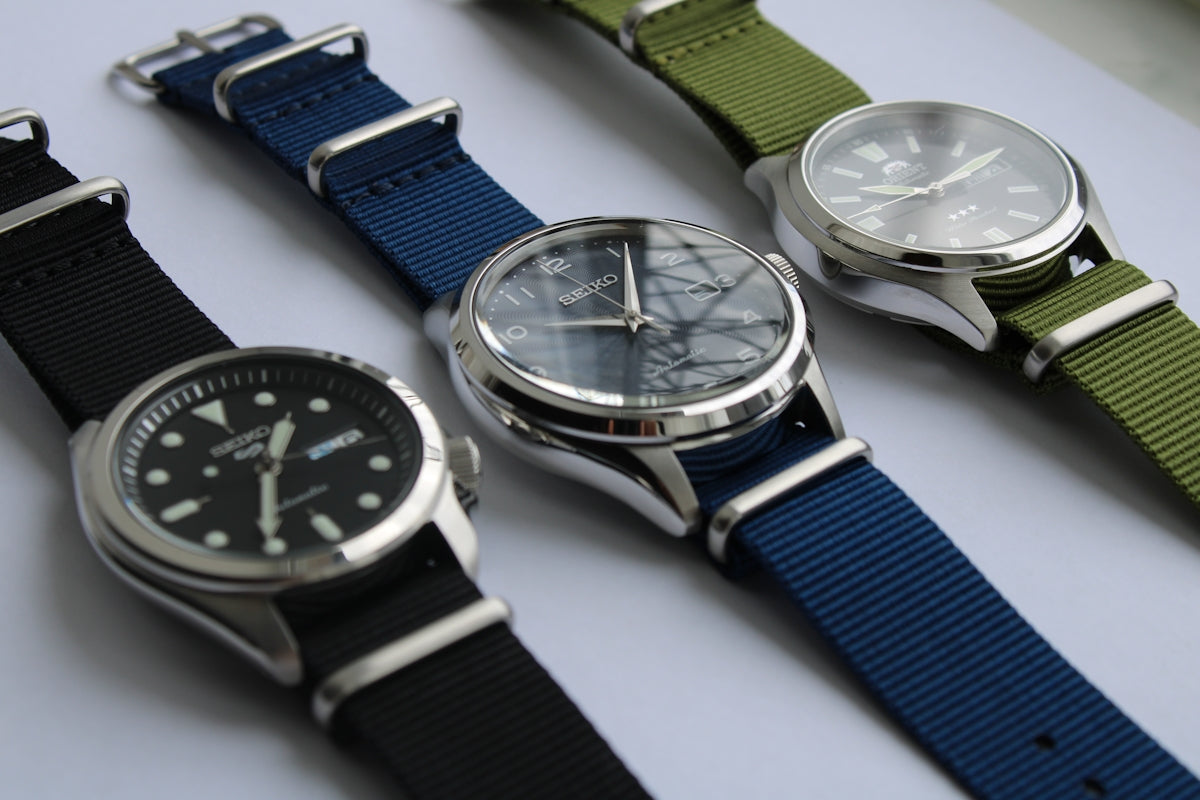
Self-winding mechanical with basic time display. The most accessible entry to mechanical watchmaking. Examples: Seiko Presage, Orient Bambino, Hamilton Khaki Field.
Choose if: You appreciate mechanical craftsmanship but don't need chronograph functionality.
Automatic Chronograph
Fully mechanical with self-winding and mechanical stopwatch. The most complex common watch type. Movements like the ETA 7750, Valjoux 7753, and in-house calibers from Omega/Tudor add chronograph complications to automatic base movements. Examples: Omega Speedmaster, Tudor Black Bay Chrono, Hamilton Intra-Matic Chronograph.
Choose if: You want the full mechanical experience with timing functionality and are prepared for higher cost and maintenance.
Frequently Asked Questions
Is chronograph the same as automatic?
No. Chronograph describes a function (stopwatch capability), while automatic describes a power source (self-winding mechanical). A watch can be an automatic chronograph (mechanical with stopwatch), a quartz chronograph (battery with stopwatch), or a simple automatic (mechanical without stopwatch). These are independent characteristics.
Are quartz watches bad?
No. Quartz watches are actually more accurate and require less maintenance than mechanical alternatives. The perception of quartz as "lesser" comes from watch enthusiast culture that values mechanical craftsmanship. For practical timekeeping, quartz is superior. Many luxury brands—including Grand Seiko with its 9F caliber—produce exceptional quartz movements.
Do automatic watches need batteries?
No. Automatic watches power themselves through wrist movement. A weighted rotor converts your arm motion into stored mechanical energy. No battery is required—though the watch will stop after 40-70 hours if left unworn. This is a key advantage for those wanting battery-free operation.
Why are automatic chronographs so expensive?
Automatic chronograph movements contain 200-300+ components compared to 50-100 in simple automatics. The chronograph mechanism—column wheel or cam, clutch system, reset hammers—adds significant complexity. Each additional component requires precision manufacturing and assembly. Swiss automatic chronograph movements cost $200-1,000+ wholesale before the watch is even built.
What is meca-quartz?
Meca-quartz is a hybrid movement combining quartz timekeeping with a mechanical chronograph module. The watch keeps time using battery-powered quartz accuracy, but the chronograph operates mechanically—providing tactile pusher feel and smooth seconds hand sweep. Seiko's VK63/VK64 series is the most common meca-quartz movement, offering chronograph functionality at accessible prices.
Which type holds value better?
Generally, automatic watches—especially chronographs from established brands—retain value better than quartz. Mechanical movements are perceived as more collectible. However, value retention depends heavily on brand, model, and condition. A Rolex quartz will hold value better than an unknown automatic. For most buyers, prioritize enjoyment over investment potential.
Conclusion
The confusion between quartz, automatic, and chronograph disappears once you understand what each term describes. Quartz and automatic are power sources—battery vs mechanical self-winding. Chronograph is a function—stopwatch capability that can exist on either power source.
Choose quartz for accuracy, low maintenance, and value. Choose automatic for mechanical craftsmanship, sweeping seconds hands, and collector appeal. Add chronograph functionality if you actually time things or appreciate the visual complexity of subdials and pushers.
For many buyers, meca-quartz chronographs—like SKYRIM's collection starting at $285—offer an ideal middle ground: quartz reliability with mechanical chronograph feel, premium materials, and accessible pricing. Start with your actual needs, then match the technology to your lifestyle.
Share:
Tags:
12 Best Seiko Dress Watches That Are Affordable Yet Elegant
15 Best GMT Watches for 2026: $300 to $15,000 Guide