


Quick Answer: The Seiko 4R38 is an automatic movement featuring an open-heart dial cutout at 12 o'clock that exposes the balance wheel, escapement, and decorative blued screws. It's essentially a 4R36 base caliber modified for Presage watches, delivering 23 jewels, 21,600 vph, 41-hour power reserve, hacking seconds, and hand-winding at $450-550 pricing.
The 4R38's open-heart design creates visible mechanical interest while maintaining practical legibility—unlike full skeleton dials that sacrifice readability. This guide covers 4R38 specifications, how the open-heart cutout works mechanically, watches using 4R38 (Presage Cocktail Time series), 4R family relationships (4R35/4R36/4R38/4R39), accuracy expectations, and whether Presage pricing justifies the open-heart premium over standard 4R36 Seiko 5 models.

What Is the Seiko 4R38 Movement? Definition and Purpose
Core Definition
The Seiko 4R38 represents Seiko's open-heart automatic movement designed specifically for the Presage collection, featuring a dial cutout at 12 o'clock that reveals the oscillating balance wheel and escapement mechanism. Unlike full skeleton movements that remove extensive dial material (reducing legibility), or standard closed-dial movements that hide all mechanics, the 4R38 balances mechanical display with practical timekeeping—maintaining solid dial portions for hour indices and branding while showcasing the "heartbeat" of the automatic movement through a strategically positioned aperture.
Key identifying features:
- Open-heart design at 12 o'clock: Circular or shaped cutout exposing balance wheel and pallet fork
- 23 jewels: One fewer jewel than 4R36 base movement (24 jewels) due to modified dial-side architecture
- Decorative finishing: Blued screws visible through open-heart window (luxury aesthetic feature)
- Based on 4R36 architecture: Shares core specifications with proven Seiko 5 Sports movement
- Presage-exclusive positioning: Found only in Presage collection, not in value-oriented Seiko 5 lineup
- Date display at 6 o'clock: Maintains practical complication alongside open-heart aesthetics
Purpose and Market Positioning
Seiko developed the 4R38 to differentiate Presage watches ($400-550) from Seiko 5 Sports models ($200-300) using standard 4R36 movements—creating visual justification for the $200-250 price premium through open-heart aesthetics and decorative finishing. The open-heart design serves both aesthetic and educational purposes: buyers appreciate visible mechanical artistry (watching the balance wheel oscillate at 21,600 beats per hour creates hypnotic visual appeal), while the cutout demonstrates automatic watchmaking principles without requiring full skeleton complexity that reduces legibility and increases manufacturing costs.
Target positioning:
- Entry-level mechanical enthusiasts: Buyers wanting visible movement mechanics at accessible $400-550 pricing (versus $1,000+ for Swiss open-heart or Grand Seiko models)
- Presage Cocktail Time fans: Collectors appreciating Presage's signature sunburst dials combined with open-heart complications
- Dress watch market: 40-41mm proportions and elegant aesthetics suit formal contexts versus Seiko 5 Sports' casual tool watch styling
- Gift purchases: Open-heart design creates instant visual impact in presentation boxes, appealing to gift givers wanting impressive automatic watches under $600
Seiko 4R38 Technical Specifications
Complete Specifications Table
| Specification | 4R38 (Presage Open-Heart) |
|---|---|
| Movement Type | Automatic mechanical with open-heart display |
| Caliber Designation | 4R38 (Seiko-branded for official Seiko watches) |
| Base Movement | 4R36 (modified for open-heart dial cutout) |
| Jewels | 23 jewels (one fewer than 4R36's 24) |
| Beat Rate | 21,600 vibrations per hour (6 beats/second) |
| Power Reserve | 41 hours when fully wound |
| Accuracy | +45/-35 seconds per day (unadjusted factory spec) |
| Open-Heart Position | 12 o'clock (exposing balance wheel and escapement) |
| Complications | Date display (at 6 o'clock or 3 o'clock depending on model) |
| Day Display | No (removed from 4R36's day-date to accommodate open-heart) |
| Hacking Seconds | Yes (seconds hand stops when crown pulled for precise time setting) |
| Hand-Winding | Yes (manual winding via crown) |
| Diameter | 26.0mm movement diameter |
| Thickness | ~5.3mm movement thickness |
| Decorative Finishing | Blued screws visible through open-heart cutout |
| Service Interval | 10-15 years typical under normal wearing conditions |
Why 23 Jewels Instead of 24?
The 4R38's 23-jewel count (versus 4R36's 24 jewels) results from the open-heart modification removing one jewel bearing from the day-date mechanism. The 4R36 base movement includes both day and date complications requiring additional gearing and jewel bearings—when Seiko modified the 4R36 for open-heart applications, they removed the day display mechanism to create dial space for the 12 o'clock cutout, eliminating one jewel in the process. This reduction doesn't affect reliability or performance: the removed jewel served the day-display function only, not core timekeeping. All critical friction points (escapement, gear train, mainspring barrel, automatic winding mechanism) retain proper jewel bearings maintaining the movement's proven 10-15 year service-free operation.
Jewel function breakdown:
- Balance wheel jewels (4 total): Cap jewels and hole jewels for balance staff, most critical for accuracy
- Escapement jewels (2 total): Pallet fork pivot jewels
- Gear train jewels (8-10 total): Center wheel, third wheel, fourth wheel, escape wheel bearings
- Automatic winding jewels (4-6 total): Rotor pivots and reversing wheel bearings
- Complication jewels (4-6 total): Date/day mechanism—4R38 removes day mechanism saving 1 jewel
The 23 vs 24 jewel difference represents functional modification, not quality downgrade—both movements deliver identical reliability and accuracy performance.

How the Open-Heart Design Works
Mechanical Architecture of Open-Heart Display
The 4R38's open-heart design functions through a precisely positioned dial cutout at 12 o'clock that reveals the balance wheel, pallet fork, and escape wheel—the components comprising the escapement mechanism regulating timekeeping accuracy. Unlike standard dial designs that cover the entire movement with solid material, or full skeleton dials that remove most dial structure, the open-heart approach maintains dial integrity while creating a strategic window into the movement's mechanical heartbeat.
What's visible through the 12 o'clock cutout:
Balance wheel and hairspring: The oscillating balance wheel (appearing as a circular wheel with adjustment screws around its perimeter) completes 6 oscillations per second (21,600 vph), creating the mesmerizing back-and-forth motion that defines mechanical watch operation. The hairspring (delicate coiled spring attached to balance wheel) controls oscillation frequency—expanding and contracting with each swing.
Pallet fork and escape wheel: The pallet fork (appearing as a forked lever visible between balance wheel swings) rocks back and forth, alternately catching and releasing the escape wheel teeth—this "tick-tock" action regulates energy release from the mainspring, converting constant mainspring power into precise rotational increments advancing the gear train and ultimately the hands.
Decorative blued screws: Seiko includes heat-blued screws (screws heated to precise temperatures causing oxidation creating blue coloring) visible through the cutout—traditional watchmaking decoration technique adding luxury aesthetics. These screws serve functional purposes (securing bridges and components) while providing visual interest.
Movement plates and bridges: Portions of the movement's top plate and balance cock (bridge securing balance wheel) remain visible, often featuring decorative finishing like sunburst patterns or circular graining (perlage) creating textural depth.
Open-Heart vs Full Skeleton vs Closed Dial
| Design Type | Dial Coverage | Legibility | Mechanical Display | Example |
|---|---|---|---|---|
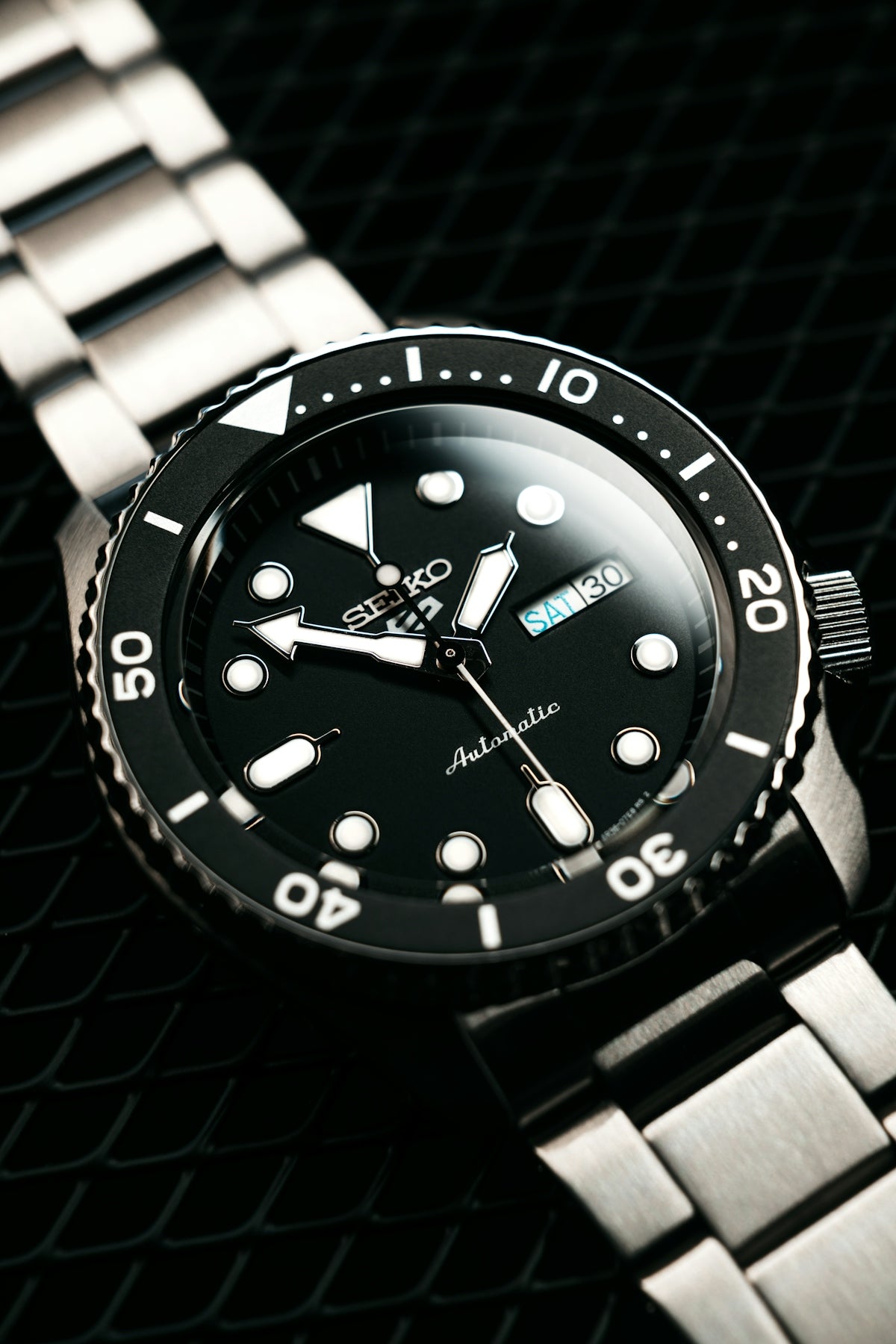
| Closed Dial | 100% solid dial | Excellent | None (all mechanics hidden) | 4R36 in Seiko 5 Sports |
| Open-Heart | ~15-20% cutout at 12 o'clock | Very Good | Balance wheel + escapement only | 4R38 in Presage Cocktail Time |
| Full Skeleton | 60-80% cutouts throughout dial | Fair to Poor | Complete movement architecture | Custom NH38/NH39 skeleton mods |
The 4R38's open-heart design balances mechanical display with practical legibility—offering 80% of full skeleton's visual appeal while maintaining 90% of closed dial's easy time-reading functionality.
Watches Using the 4R38 Movement
Seiko Presage Cocktail Time Open-Heart Models
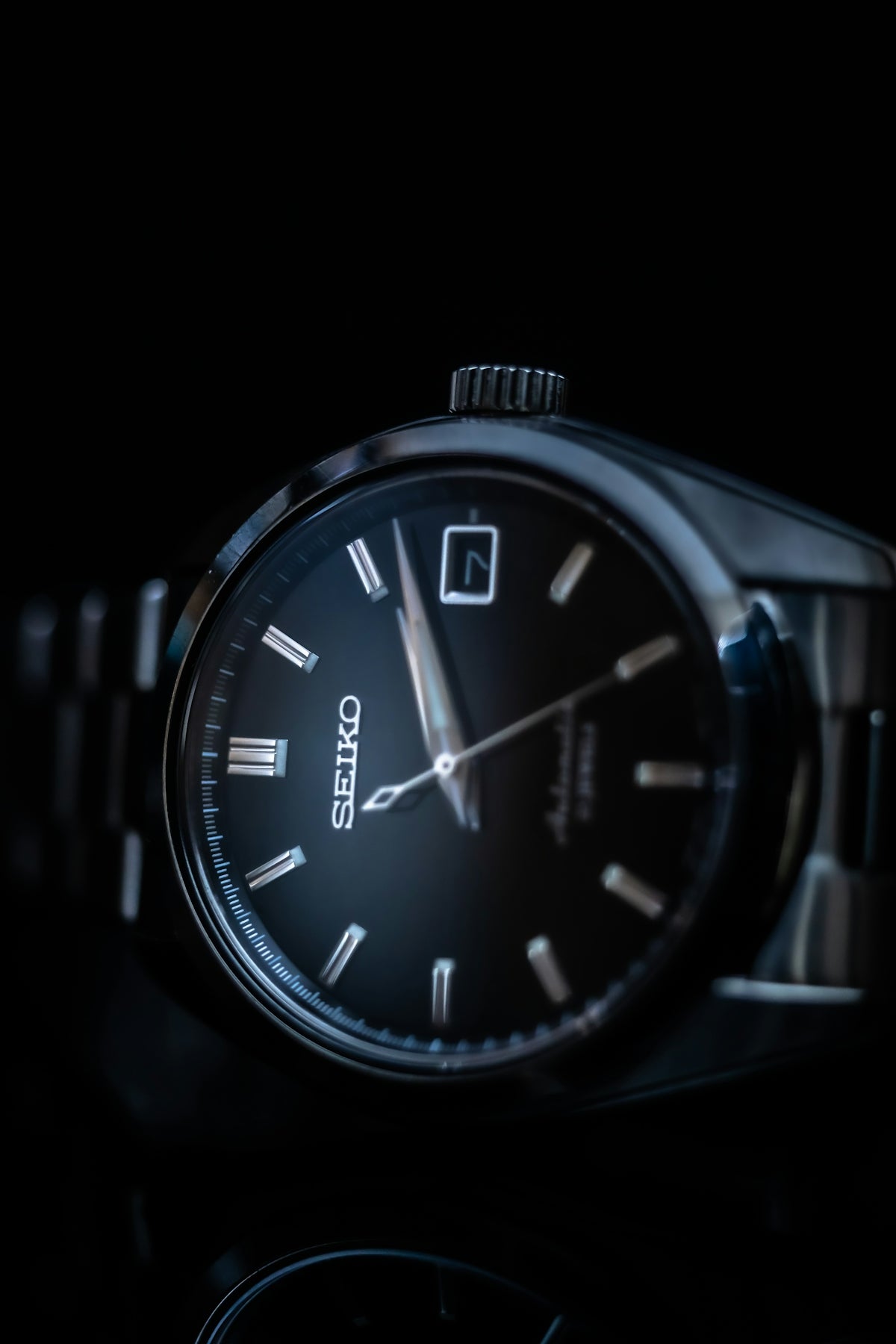
The Presage Cocktail Time collection represents the 4R38's primary application, combining Seiko's signature sunburst dials (inspired by Tokyo bartender Hisashi Kishi's cocktail creations) with open-heart complications:
SSA343 - Blue Dial Open-Heart:
- Sunburst blue dial with 12 o'clock open-heart cutout
- 40.5mm case diameter, dress watch proportions
- Sapphire crystal with anti-reflective coating
- Brown leather strap with deployant clasp
- Price: ~$450-500
- Most popular 4R38 model due to classic blue aesthetic
SSA345 - Champagne Dial Open-Heart:
- Sunburst champagne/gold dial creating warm luxury appearance
- Same 40.5mm case and sapphire crystal as SSA343
- Brown leather strap
- Price: ~$450-500
SSA346 - White Dial Open-Heart:
- Clean white sunburst dial with high contrast black hands
- Optimal legibility for dress watch contexts
- 40.5mm case, sapphire crystal
- Black or brown leather strap options
- Price: ~$450-500
SSA413 - Sakura (Cherry Blossom) Limited Edition:
- Pink sunburst dial referencing Japanese cherry blossoms
- Limited production creating collectibility
- Same core specifications as standard Cocktail Time
- Price: ~$500-550 (limited edition premium)
Other Presage Series Using 4R38
Presage Sharp Edged Series (some models): Angular case designs with faceted lugs creating contemporary aesthetics versus Cocktail Time's classic round cases. Select Sharp Edged models use 4R38 open-heart movements combined with textured dials.
Presage Style60's (select models): Vintage-inspired designs referencing 1960s Seiko aesthetics, with some variants featuring 4R38 movements and retro dial designs paired with open-heart cutouts.
Regional exclusive Presage models: Japan domestic market and select Asian markets receive Presage variants with unique dial colors, case finishes, and strap combinations—some utilizing 4R38 movements unavailable in Western markets.
Why 4R38 Remains Presage-Exclusive
Seiko reserves the 4R38 for Presage collection exclusively, never using it in value-oriented Seiko 5 Sports lineup despite the 4R36 base architecture appearing in both collections. This exclusivity serves product differentiation: Presage justifies $400-550 pricing through open-heart aesthetics, sapphire crystals, sunburst dial finishing, and refined case proportions—features absent in $200-300 Seiko 5 Sports models. If Seiko offered 4R38 open-heart watches in Seiko 5 lineup at $300 pricing, Presage's premium positioning would collapse. The movement exclusivity maintains clear segmentation between affordable tool watches (Seiko 5) and accessible dress watches (Presage).

4R Series Movement Family Relationships
Complete 4R Family Overview
The 4R38 belongs to Seiko's 4R movement family—a series of affordable automatic calibers sharing core architecture while varying complications and dial configurations. Understanding the family relationships clarifies the 4R38's specific positioning:
| Movement | Jewels | Complications | Special Features | Typical Application |
|---|---|---|---|---|
| 4R35 | 23 | Date only | No day display, clean dial symmetry | Seiko 5 Sports, some Presage |
| 4R36 | 24 | Day-date | Both day and date displays | Seiko 5 Sports (most common) |
| 4R37 | 24 | Day-date | Power reserve indicator | Select Presage models |
| 4R38 | 23 | Date only | Open-heart at 12 o'clock | Presage Cocktail Time, Presage open-heart models |
| 4R39 | 23 | None (no-date) | Open-heart, clean symmetry | Select Presage open-heart (date-free aesthetics) |
| 4R34 | 24 | Day-date + GMT | 24-hour hand, caller GMT | Seiko 5 Sports GMT |
4R38 vs 4R39: Open-Heart Variants
Both 4R38 and 4R39 feature open-heart designs, with the sole difference being date complication:
4R38: Open-heart + date display (at 6 o'clock or 3 o'clock depending on dial design). Most common open-heart variant—buyers generally want date functionality for daily wear practicality.
4R39: Open-heart + no-date. Removes date window entirely, creating perfectly symmetrical dial aesthetics preferred by purists. Less common—found in special edition Presage models prioritizing clean design over practical complications.
Both share identical 23-jewel count, 21,600 vph beat rate, 41-hour reserve, and reliability. Choosing between them becomes pure aesthetic preference: date functionality versus dial symmetry.
Shared Architecture Advantages
All 4R movements share core components—mainspring barrel, gear train, escapement, automatic winding mechanism—creating service advantages:
- Parts interchangeability: Watchmakers servicing 4R38 use same parts inventory as 4R35/4R36 (balance wheel, hairspring, pallet fork, gears all identical)
- Service expertise: Any watchmaker servicing common 4R36 movements handles 4R38 identically—no specialized training required
- Proven reliability: 4R38 inherits 4R36's track record (millions of units since 2011, 10-15 year service-free operation typical)
- Affordable service: Complete service costs $200-300 (identical to 4R36) versus $400-600 for higher-end 6R movements
4R38 Accuracy and Performance
Accuracy Specifications and Real-World Performance
Factory specification: Seiko rates the 4R38 at +45 to -35 seconds per day accuracy—the same specification as all 4R family movements. This relatively wide tolerance reflects the movement's affordable positioning (non-chronometer grade) and unadjusted factory regulation (Seiko doesn't individually regulate each movement before installation, relying on statistical quality control instead).
Real-world accuracy: Most 4R38 owners report actual performance significantly better than factory spec, typically achieving -10 to +20 seconds per day when worn regularly. After a 2-3 month break-in period (movement components wearing in, oils distributing evenly), accuracy often stabilizes to ±10-15 seconds per day—acceptable performance for mechanical watches in the $450-500 price range.
Factors affecting accuracy:
Wearing position: The 4R38 performs differently depending on position—dial-up, dial-down, crown-up, crown-down each create different gravitational effects on the balance wheel. Daily wrist wear averages these positions, improving overall accuracy versus sitting stationary in one position.
Activity level: Regular wrist movement maintains optimal automatic winding tension—fully wound mainspring delivers more consistent accuracy than partially wound states. Desk workers (minimal wrist movement) may experience less consistent accuracy than active wearers.
Temperature: Mechanical movements run faster in warm temperatures (metal components expand), slower in cold. Body heat during wearing provides stable thermal environment improving regulation versus extreme temperature fluctuations.
Regulation adjustment: If 4R38 accuracy proves unsatisfactory (consistently beyond ±20 sec/day after break-in), watchmakers can regulate the movement for $50-100—adjusting the regulator pins affecting hairspring active length and thus oscillation frequency. Skilled regulation typically achieves ±5-10 seconds per day, occasionally ±3-5 seconds with careful position timing.
Power Reserve Behavior
The 4R38's 41-hour power reserve means:
Weekend wearers: If removed Friday evening (6 PM) after full day of wear, the watch stops by Sunday morning (11 AM)—insufficient for weekend-only wearing. Requires manual winding Sunday morning or resetting time Monday.
Daily wearers: Normal daily wear (8-12 hours on wrist) maintains adequate automatic winding—watch never stops. Overnight off-wrist time (8-10 hours sleeping) consumes only 20-25% of reserve.
Rotation wearers: Wearing 3-4 times weekly maintains sufficient winding if each wearing session lasts 6+ hours with moderate activity. Less frequent wear requires manual winding via crown (Position 0, rotate clockwise 20-30 times until resistance increases indicating full wind).
Compared to competition: 41 hours represents standard performance for entry-level automatic movements—Swiss ETA 2824 offers similar 38-42 hours, while premium movements like Grand Seiko's 9S85 provide 55 hours and Rolex 3235 delivers 70 hours through improved mainspring metallurgy and barrel design.
Service and Maintenance Requirements
Service Interval and Costs
Recommended service interval: Seiko officially recommends complete movement service every 3-5 years for optimal performance. However, real-world 4R movements commonly operate 8-12 years before requiring service—many owners report 10+ years of accurate daily wear before noticing deterioration (increased rate variation, reduced power reserve, occasional stopping).
Service cost breakdown:
- Authorized Seiko service centers: $250-350 for complete service (disassembly, cleaning, lubrication, reassembly, regulation, timing, water resistance testing)
- Independent watchmakers: $150-250 for identical service—lower cost due to lower overhead, same quality if watchmaker experienced with Seiko movements
- Basic regulation only: $50-100 if movement runs but accuracy drifted—quick adjustment without full disassembly
What full service includes:
- Complete disassembly of movement into individual components
- Ultrasonic cleaning removing old lubricants and debris
- Inspection of all parts for wear (balance pivots, pallet fork jewels, gear teeth)
- Replacement of worn components (typically mainspring, gaskets)
- Fresh lubrication with proper oils and greases (different viscosities for different friction points)
- Reassembly and regulation to ±5-10 sec/day specification
- Timing machine verification across multiple positions
- Case cleaning, crystal polishing, gasket replacement
- Water resistance pressure testing (if applicable to watch model)
Open-Heart Specific Maintenance
The 4R38's open-heart design creates one additional maintenance consideration versus closed-dial 4R36 movements: dust accumulation on visible components. The dial cutout allows dust, lint, and airborne particles to settle on the balance wheel, pallet fork, and exposed plates visible through the 12 o'clock aperture—creating unsightly appearance even though it doesn't affect timekeeping (debris sits on top of components rather than interfering with gearing or lubrication).
Preventive measures:
- Monthly compressed air cleaning: Using camera sensor cleaning cans (not canned air from office supply stores—those contain propellants leaving residue), gently blow dust from open-heart cutout holding watch dial-down (prevents blowing debris deeper into movement)
- Storage in closed watch box: Minimizes dust exposure when not wearing
- Avoid dusty environments: Remove watch during woodworking, construction, desert hiking, or other dusty activities
- Professional dial-side cleaning: During regular service intervals (every 5-10 years), watchmaker removes crystal to properly clean exposed components and reseal with fresh gasket
This maintenance proves less intensive than full skeleton watches (requiring monthly professional cleaning) but more involved than closed-dial watches (no visible dust concerns). Most owners accept monthly 30-second compressed air cleaning as reasonable trade-off for open-heart aesthetics.
4R38 Value Proposition: Is It Worth Presage Pricing?
Cost Analysis: What You're Paying For
Presage watches with 4R38 movements typically cost $450-550, representing $200-250 premium over Seiko 5 Sports models using 4R36 movements at $200-300. Understanding what justifies this premium:
4R38 movement premium: The open-heart modification adds approximately $30-50 to manufacturing cost versus standard 4R36—minimal cost increase for the decorative blued screws, dial cutout tooling, and modified dial-side architecture.
Presage specification upgrades:
- Sapphire crystal (vs Hardlex in Seiko 5): Adds $80-120 value—sapphire's 9 Mohs hardness maintains scratch-free clarity for decades versus Hardlex's 5-6 Mohs accumulating scratches over 2-5 years
- Sunburst dial finishing: Presage Cocktail Time's signature radiating dial patterns require specialized tooling and production time versus Seiko 5's flat painted dials—adds $30-60 manufacturing cost
- Refined case finishing: Presage cases feature polished bevels and mixed brushed/polished surfaces versus Seiko 5's uniform brushing—adds $20-40 labor cost
- Deployant clasp (on leather straps): Folding deployant clasps cost $15-25 more than standard tang buckles, offering convenience and strap longevity
- Dress watch proportions: 40-41mm sizing and slim cases versus Seiko 5's 42-43mm tool watch proportions—different market positioning
Total added value: Approximately $170-250 in genuine specification upgrades justifying the $200-250 retail price difference. The 4R38 open-heart contributes $30-50 of this premium, with sapphire crystal ($80-120) representing the largest upgrade.
Alternatives and Competition
Orient Bambino Open Heart ($180-250): Uses Orient's in-house F6922 open-heart movement in 40.5mm dress watch case. Significantly cheaper but sacrifices sapphire crystal (uses mineral glass) and Presage's sunburst dial finishing. Best for budget-conscious buyers testing open-heart aesthetics before deeper investment.
Bulova Automatic Open Heart ($250-300): Uses Miyota 821A movement with open-heart design, often featuring skeleton dials and exhibition casebacks. Similar pricing to Seiko 5 Sports but different aesthetic—more vintage/ornate versus Presage's refined modern elegance.
Hamilton Jazzmaster Open Heart ($500-700): Swiss-made with ETA-based movements, sapphire crystals, 40-42mm sizing. Direct competitor to Presage at similar or slightly higher pricing—choosing between them becomes brand preference (Swiss vs Japanese) and design aesthetics.
Tissot Tradition Open Heart ($400-600): Swiss Powermatic 80 movement (80-hour power reserve, nearly 2x the 4R38's 41 hours), sapphire crystal, traditional dress watch styling. Comparable pricing to Presage with longer power reserve advantage—trade-off becomes Seiko's finishing quality versus Swiss branding and reserve.
Decision Framework: Buy 4R38 Presage If You:
- Want affordable open-heart with sapphire crystal: 4R38 Presage delivers scratch-resistant sapphire + decorative movement display at $450-500 (Orient cheaper but uses scratchable mineral glass)
- Appreciate Presage Cocktail Time aesthetics: Sunburst dials + open-heart combination creates unique visual depth unavailable from competitors
- Prioritize Seiko reliability and service network: 4R movements' proven track record and global service availability versus less-established competitors
- Need dress watch proportions: 40-41mm Presage sizing suits smaller wrists and formal contexts better than 42-43mm Seiko 5 Sports
- Accept 41-hour power reserve: Daily or frequent wearing maintains winding—not an issue for primary watch rotation
Skip 4R38 Presage and Consider Alternatives If You:
- Prioritize power reserve: 41 hours insufficient for weekend-only wearing—consider Tissot Powermatic 80 (80 hours) or save for Grand Seiko (72 hours)
- Budget constrains under $300: Orient Bambino Open Heart at $180-250 delivers similar aesthetics accepting mineral crystal trade-off
- Want true skeleton (not just open-heart): 4R38 shows only balance wheel—full skeleton custom mods using NH38/NH39 reveal complete movement architecture
- Don't value open-heart specifically: If dial cutout doesn't appeal aesthetically, standard Seiko 5 Sports 4R36 at $200-300 delivers identical reliability at lower cost
Frequently Asked Questions
What is the difference between 4R38 and 4R36 movements?
Three key differences: 4R38 features an open-heart cutout at 12 o'clock exposing the balance wheel (4R36 has closed dial), has 23 jewels instead of 24 (day mechanism removed), and offers date-only versus 4R36's day-date. All other specs match—21,600 vph, 41-hour reserve, ±10-15 sec/day accuracy, identical service costs ($200-300).
Is the Seiko 4R38 a good movement?
Yes, the 4R38 delivers excellent reliability at $450-550 Presage pricing. It inherits proven 4R36 architecture powering millions of Seiko 5 Sports since 2011, with 10-15 year service-free operation and ±10-15 sec/day accuracy. The open-heart design adds visual interest without compromising reliability. Advantages: affordable $200-300 servicing, global parts availability, hacking seconds, hand-winding. Limitations: non-chronometer accuracy and moderate 41-hour reserve versus premium movements.
How many jewels does a 4R38 have and why?
The 4R38 has 23 jewels versus 4R36's 24 jewels—the difference comes from removing the day display mechanism to create the open-heart cutout. Jewels serve as friction-reducing bearings at critical pivot points. The removed jewel served only the day display; all critical timekeeping components (balance wheel, pallet fork, gear train, automatic winding) retain proper jewel bearings. Performance matches 4R36 exactly—the jewel difference represents functional modification, not quality downgrade.
What watches use the Seiko 4R38 movement?
The 4R38 appears exclusively in Seiko Presage watches. Primary models include Presage Cocktail Time open-heart series: SSA343 (blue), SSA345 (champagne), SSA346 (white), SSA413 (Sakura limited edition). All feature 40.5mm cases, sapphire crystals, and sunburst dials at $450-550. Select Sharp Edged and Style60's models also use 4R38. Never found in Seiko 5 Sports lineup.
Does the 4R38 require more maintenance than 4R36?
Slightly more cosmetic maintenance only. The open-heart cutout allows dust to settle on visible components—monthly compressed air cleaning (dial-down position) keeps it looking clean. This is cosmetic, not mechanical. Core service intervals match 4R36 exactly: 10-15 years typical, $200-300 cost, same procedures. Mechanical reliability is identical.
Conclusion
The Seiko 4R38 delivers affordable open-heart aesthetics by modifying the proven 4R36 base caliber with a 12 o'clock cutout exposing the balance wheel and decorative blued screws. Same 41-hour reserve, ±10-15 sec/day accuracy, and 10-15 year service-free operation—the open-heart design adds visual appeal without compromising reliability.
The $200-250 premium over Seiko 5 Sports buys sapphire crystal, sunburst dial finishing, and the open-heart complication. This positions 4R38 Presage models as entry-level mechanical dress watches with visible movement artistry at $450-550.
Choose 4R38 Presage for open-heart aesthetics with sapphire protection and 40-41mm dress proportions. Skip it if 41-hour reserve proves insufficient for weekend-only wearing, or if open-heart design doesn't appeal—standard 4R36 Seiko 5 at $200-300 delivers identical mechanical performance.
Share:
Tags:
What is an Automatic Watch? Complete Guide 2026
What is Seiko 5 GMT? Complete Guide to 4R34 Movement