


Quick Answer:
A "Seiko Panda" refers to Seiko chronograph watches featuring the iconic "panda dial" design—a white or cream main dial with contrasting black chronograph subdials, creating high-contrast aesthetics that resemble a panda's face (black eyes/nose on white fur). The most famous Seiko Panda is the SSC813 Prospex Speedtimer Solar Chronograph, featuring a 39mm stainless steel case, white sand-blasted dial with three black subdials, sapphire crystal, solar-powered V192 movement with 6-month power reserve, and 100m water resistance at $580-725. The term "reverse panda" describes the inverse configuration—black dial with white subdials—exemplified by the SSC819. Panda dials originated with the 1963 Rolex Daytona 6239 and remain popular due to exceptional legibility, timeless racing aesthetics, and the striking black-and-white contrast that defines classic chronograph design.
Understanding what makes a watch a "panda," the design history behind this iconic colorway, Seiko's panda dial offerings, and how to choose between panda and reverse panda configurations helps you appreciate why this design remains one of watchmaking's most beloved aesthetics.

What is a Panda Dial? Definition & Design Elements
Before exploring Seiko's panda offerings specifically, understanding the panda dial concept clarifies what distinguishes this design from standard chronographs.
Core Definition
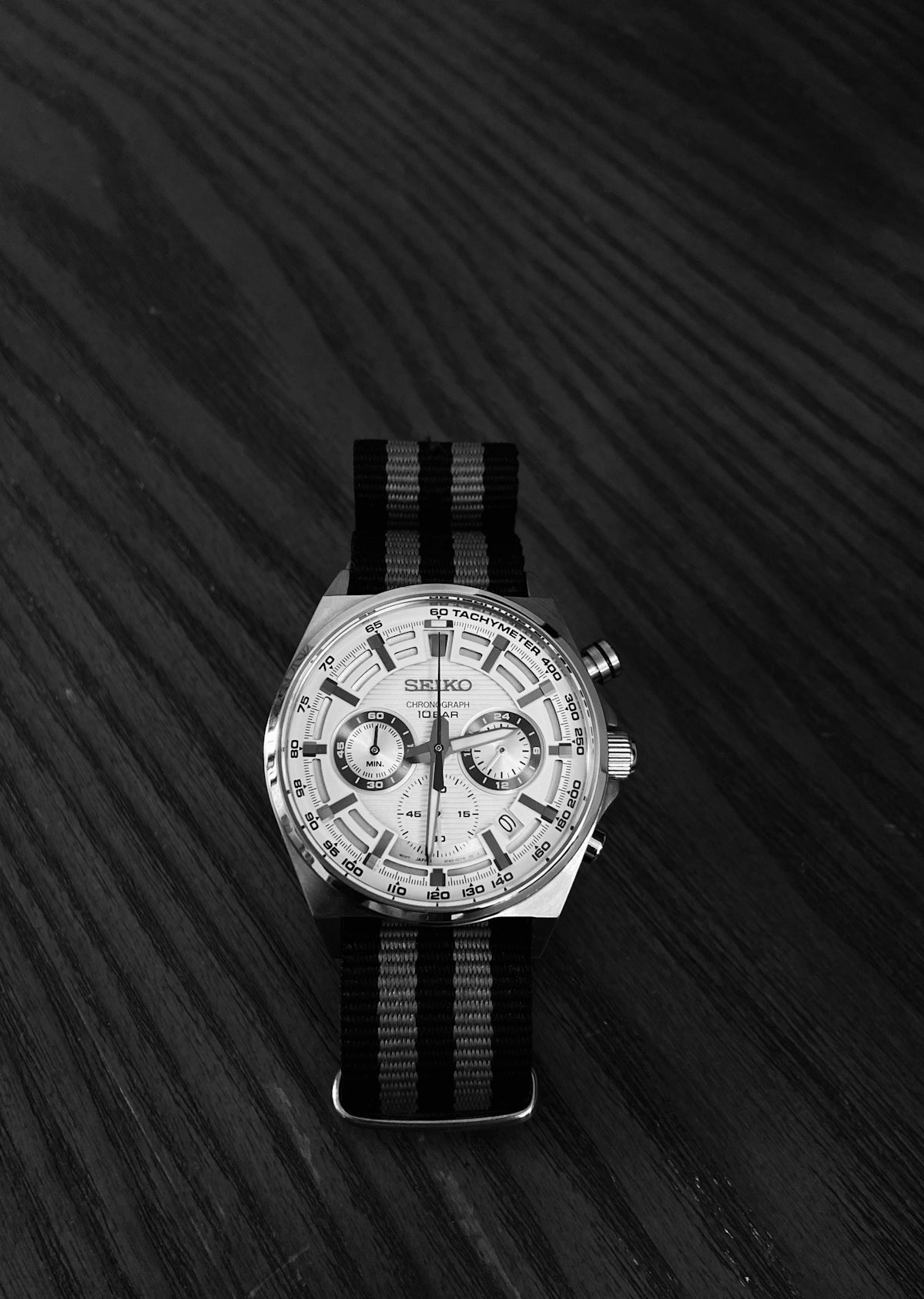
Panda Dial: A chronograph watch dial configuration featuring a light-colored main dial (typically white, cream, or silver) with contrasting dark subdials (typically black). The subdials usually occupy the 3, 6, and 9 o'clock positions—creating a visual pattern reminiscent of a panda bear's face, with the subdials representing the eyes and nose against the white fur background.
Essential Characteristics:
- High Contrast: Maximum visual contrast between main dial and subdials (white/black or cream/black)
- Chronograph Configuration: Three subdials typical—running seconds (usually 9 o'clock), 30-minute counter (3 o'clock), and 12-hour counter (6 o'clock), or variations thereof
- Clean Layout: Symmetrical subdial arrangement creating balanced, legible design
- Racing Heritage: Design associated with motorsports chronographs and professional racing timepieces
Reverse Panda Dial
Definition: The inverse configuration—a dark main dial (typically black) with light-colored subdials (typically white, cream, or silver). This creates the opposite visual effect while maintaining the high-contrast panda aesthetic.
Naming: Called "reverse panda," "inverse panda," or sometimes colloquially "Paul Newman" dial when referencing certain vintage Rolex Daytona configurations.
Why "Panda"?
The nickname derives from the visual similarity to a giant panda's face—black eyes and nose against white fur. When viewing a panda dial chronograph, the three black subdials positioned at 3, 6, and 9 o'clock create a pattern resembling a panda's facial features. This playful terminology became popular among watch collectors and has since entered mainstream watch nomenclature.
History of Panda Dial Watches
The 1963 Origin: Rolex Cosmograph Daytona 6239
The panda dial aesthetic traces its origins to 1963 with the introduction of the Rolex Cosmograph Daytona reference 6239—one of the most influential chronograph designs in watchmaking history.
Historical Context: Rolex designed the Daytona specifically for professional race car drivers, featuring a tachymeter bezel for calculating average speeds and high-contrast dials for optimal legibility during racing. The white dial with black subdials configuration delivered instant readability—critical when drivers needed to monitor timing while maintaining focus on the track.
Racing Connection: The Daytona's association with motorsports, particularly the Daytona International Speedway in Florida, cemented the panda dial's connection with racing heritage. Legendary race car drivers like Paul Newman wearing these chronographs elevated the design to icon status.
The Spread Across Watchmaking
Following the Daytona's success, panda dial configurations appeared across the watch industry:
- 1960s-1970s: Heuer (now TAG Heuer) introduced panda dial Carreras and Autavias, Omega released panda Speedmasters, and numerous Swiss manufacturers adopted the design for racing chronographs
- 1980s-1990s: Japanese manufacturers including Seiko began offering panda dial chronographs, making the aesthetic accessible at various price points
- 2000s-Present: Panda dials experienced resurgence as vintage-inspired designs gained popularity; nearly every major watch brand now offers panda or reverse panda configurations
Why Panda Dials Endure
The panda dial aesthetic transcends trends due to several timeless qualities:
Universal Legibility: High contrast enables instant chronograph reading in any lighting conditions—the original functional purpose remains relevant.
Timeless Aesthetics: Black-and-white color schemes never go out of style; the panda dial looks as contemporary today as it did in 1963.
Emotional Connection: The playful panda association creates approachability and personality that pure technical specifications cannot achieve.
Heritage Appeal: Connection to legendary racing chronographs and vintage watchmaking's golden era resonates with collectors and enthusiasts.
Seiko's Panda Dial Watches: The SSC813 & SSC819 Speedtimer
Seiko's most prominent panda dial offerings come from the Prospex Speedtimer Solar Chronograph collection, specifically the SSC813 (panda) and SSC819 (reverse panda) models released in November 2021.
Seiko SSC813: The Classic Panda
Visual Design: The SSC813 features a white sand-blasted dial with three black subdials positioned at 3, 6, and 9 o'clock—creating the archetypal panda dial aesthetic. The sand-blasted texture adds depth and visual interest while maintaining legibility. Applied indices and hands with LumiBrite coating ensure nighttime visibility.
Complete Specifications:
| Specification | SSC813 Details |
|---|---|
| Reference Number | SSC813 (USA) / SBDL085 (JDM) |
| Movement | Seiko Solar Quartz V192 |
| Power Source | Solar-powered (light energy, no battery changes) |
| Power Reserve | 6 months once fully charged |
| Accuracy | ±15 seconds per month |
| Case Material | Stainless steel |
| Case Diameter | 39mm |
| Case Thickness | 13.3mm |
| Lug-to-Lug | 45.5mm |
| Lug Width | 20mm |
| Weight | 160 grams |
| Crystal | Curved sapphire crystal |
| Water Resistance | 10 bar / 100 meters / 330 feet |
| Dial Color | White with sand-blasted texture |
| Subdials | Three black subdials (3, 6, 9 o'clock) |
| Chronograph Functions | Measures up to 60 minutes in 1/5 second increments, split time function |
| Additional Features | 24-hour indicator, date display at 4:30, power reserve indicator, tachymeter bezel |
| Lume | LumiBrite on hands and hour markers |
| Bracelet | Stainless steel with push-button deployant clasp |
| MSRP | $725 USD |
| Street Price | $580-$653 |
Seiko SSC819: The Reverse Panda
Visual Design: The SSC819 inverts the panda aesthetic with a black sand-blasted dial and three black subdials (creating subtle contrast through texture rather than color), complemented by beige LumiBrite hands and markers that provide the light accent. This creates a sportier, more understated appearance compared to the high-contrast SSC813.
Key Specifications: The SSC819 shares identical mechanical specifications with the SSC813—39mm × 13.3mm case, solar V192 movement, sapphire crystal, 100m water resistance, and 6-month power reserve. The primary differences lie in aesthetic choices: black dial, beige lume, and subtle subdial contrast versus the SSC813's stark panda contrast.
Pricing: MSRP $675-725, with street prices around $580, similar to the SSC813.
Why the SSC813 is Called the "Seitona"
Watch enthusiasts nicknamed the SSC813 the "Seitona"—a playful portmanteau combining "Seiko" with "Daytona," acknowledging the design's clear inspiration from the legendary Rolex Cosmograph Daytona. While the SSC813 doesn't attempt to directly copy the Daytona, the panda dial colorway, chronograph layout, tachymeter bezel, and racing-inspired aesthetics create obvious visual connections. The "Seitona" nickname reflects collectors' recognition of the SSC813 as Seiko's homage to the Daytona's iconic design language.
Why Panda Dial Watches Remain Popular
1. Exceptional Legibility
The Functional Foundation: High-contrast dial designs weren't chosen for aesthetics alone—they solve a practical problem. Racing chronographs required instant readability while drivers monitored timing without diverting attention from the track. Black subdials on white backgrounds create maximum contrast, enabling split-second glance reading even in challenging lighting conditions.
Modern Relevance: While few owners use chronographs for actual racing, legibility remains valuable. Daily activities—timing parking meters, cooking, workouts—benefit from instantly readable chronograph displays. The panda dial's clarity proves its functional design transcends its racing origins.
2. Timeless Aesthetic Appeal
Color Versatility: Black and white color schemes work with any wardrobe—formal, business casual, or sporty attire. Unlike colored dials that may clash with clothing choices, panda dials maintain versatility.
Design Longevity: Trends come and go, but high-contrast monochrome aesthetics remain perpetually contemporary. A panda dial watch purchased today will look equally appropriate in 20 years—unlike fashion-forward designs that date themselves quickly.
3. Emotional & Cultural Connection
Playful Association: The panda nickname creates approachability and character. Unlike technical names (chronograph, tachymeter), "panda dial" invites everyone—from watch novices to serious collectors—into the conversation with a smile.
Collector Appeal: Among enthusiasts, owning a "panda" represents participation in a shared cultural reference spanning six decades of watchmaking. The term immediately communicates design understanding and appreciation of chronograph heritage.
4. Racing Heritage & Vintage Romance
Motorsports Mystique: Panda dials evoke golden age motorsports—Steve McQueen, Paul Newman, Formula 1's glamorous 1960s-70s era. This connection to racing's romantic past adds storytelling depth beyond pure functionality.
Vintage Inspiration: Modern panda dial watches capture vintage aesthetics while incorporating contemporary quality standards (sapphire crystals, improved water resistance, reliable movements). This bridges nostalgia with practical modern performance.
Panda vs Reverse Panda: Which Should You Choose?
Classic Panda (White Dial, Black Subdials)
Visual Impact: Higher contrast creates bold, eye-catching appearance that draws attention. The white dial reflects more light, making the watch visually prominent on the wrist.
Best For:
- Buyers wanting maximum dial legibility
- Those preferring brighter, more reflective watches
- Collectors seeking the archetypal panda aesthetic directly inspired by vintage Daytona references
- Wearers with darker skin tones (white dials create stronger wrist contrast)
- Formal and business casual contexts where brightness doesn't overwhelm
Considerations: White dials show aging more prominently—patina, yellowing, or discoloration becomes visible. Bright reflections in certain lighting may reduce legibility compared to matte black dials.
Reverse Panda (Black Dial, Light Subdials)
Visual Impact: More subtle, sophisticated appearance. Black dials absorb light rather than reflecting it, creating understated elegance. The light subdials provide necessary contrast without the boldness of white main dials.
Best For:
- Buyers preferring stealthy, tactical aesthetics
- Those wanting versatile chronographs that don't call attention
- Tool watch enthusiasts appreciating functional dark dials
- Wearers with lighter skin tones (black creates strong wrist contrast)
- Casual, sporty, or technical professional contexts
Considerations: Lower overall contrast compared to classic pandas. Subdials may be harder to read in very low light (though this applies to both configurations). Black dials hide wear and aging better than white dials.
The Practical Reality
Neither configuration is objectively superior—preference depends on personal aesthetics, wrist size, skin tone, wardrobe, and use context. Many collectors eventually own both, appreciating how each serves different moods and occasions. If choosing only one, consider which aesthetic you gravitate toward instinctively—that emotional response usually proves the best guide.
Other Notable Seiko Panda Dial Models
Beyond the SSC813 and SSC819, Seiko has produced numerous panda dial chronographs throughout its history:
Seiko Prospex Speedtimer Mechanical Chronograph
For enthusiasts preferring mechanical movements over solar quartz, Seiko offers mechanical Speedtimer chronographs featuring panda dial configurations. These use automatic movements (typically column-wheel chronographs) at higher price points ($1,200-$1,800) compared to the solar models.
Vintage Seiko Panda Chronographs
Seiko produced panda dial chronographs throughout the 1970s-1990s, including models like the 6138-series "Panda" automatic chronographs. These vintage references have become collectible, with prices varying based on condition, originality, and specific reference numbers.
Limited Editions & Collaborations
Seiko occasionally releases limited edition panda dial chronographs through collaborations or special collections, featuring unique dial textures, colors, or design elements. These limited runs often appreciate in value and become sought-after collector pieces.
How to Style a Seiko Panda Dial Watch
With Formal Attire
Classic Pandas: White dial pandas work beautifully with business formal and semi-formal attire. Pair with navy, grey, or black suits. The clean white dial complements dress shirt cuffs without appearing too sporty.
Reverse Pandas: Black dial reverse pandas lean slightly more casual but still work with business casual and smart-casual outfits. Excellent with blazers, dress shirts without ties, and Friday business attire.
With Casual Wear
Both Configurations: Panda dials excel in casual contexts—jeans, chinos, polos, casual button-downs. The chronograph functionality and racing heritage align perfectly with weekend wear and active lifestyles.
Strap Options
Steel Bracelet: The standard stainless steel bracelet offers versatility and durability for all occasions.
Leather Straps: Black or brown leather straps dress up panda dial chronographs for formal contexts. Vintage-inspired straps enhance retro racing aesthetics.
NATO Straps: Casual NATO straps in black, grey, racing stripes, or olive enhance the sporty character. Particularly effective with the SSC813's panda aesthetic.
Rubber Straps: Black rubber or silicone straps emphasize tool watch characteristics and improve comfort during active wear.
Frequently Asked Questions
What does "panda dial" mean?
A panda dial refers to a watch dial design featuring a light-colored main dial (typically white) with contrasting dark subdials (typically black), creating high-contrast aesthetics resembling a panda bear's face. The term originated in watch collecting to describe chronographs with this specific color configuration, first popularized by the 1963 Rolex Daytona.
Why is the Seiko SSC813 called the "Seitona"?
The nickname "Seitona" combines "Seiko" and "Daytona," acknowledging the SSC813's design inspiration from the iconic Rolex Cosmograph Daytona. While not a direct copy, the SSC813's panda dial, chronograph layout, tachymeter bezel, and racing aesthetics create visual connections to the Daytona, leading enthusiasts to affectionately call it the "Seitona"—Seiko's accessible homage to the legendary Rolex chronograph.
What's the difference between panda and reverse panda dials?
A panda dial features a light main dial (white/cream) with dark subdials (black). A reverse panda inverts this—dark main dial (black) with light subdials (white/cream). Both create high-contrast chronograph displays, but pandas appear brighter and more reflective, while reverse pandas look sportier and more understated. Choice depends on personal aesthetic preferences and intended use contexts.
Is the Seiko SSC813 worth buying?
Yes, for buyers seeking an affordable, reliable panda dial chronograph. The SSC813 delivers genuine panda aesthetics, solar-powered convenience (no battery changes), sapphire crystal, 100m water resistance, and Seiko's proven quality at $580-725—exceptional value compared to luxury panda chronographs costing $5,000-$20,000. The solar V192 movement's 6-month power reserve and ±15 sec/month accuracy provide hassle-free daily wear. Limitations include 13.3mm thickness (not dress watch slim) and quartz movement (versus mechanical alternatives).
How accurate is the Seiko SSC813?
The SSC813's solar quartz V192 movement delivers ±15 seconds per month accuracy (approximately ±0.5 seconds daily)—significantly more accurate than mechanical chronographs typically rated at ±15-25 seconds per day. Solar quartz combines quartz precision with eco-friendly light-powered operation, eliminating battery replacement while maintaining superior accuracy compared to automatic movements.
Can you swim with a Seiko SSC813?
Yes. The SSC813's 10 bar / 100-meter water resistance rating supports swimming, snorkeling, and water sports (but not scuba diving beyond recreational depths). This rating exceeds typical daily water exposure—showers, rain, handwashing—with substantial safety margin. Avoid operating chronograph pushers while submerged, as this can compromise water resistance seals.
How long does the solar battery last in Seiko SSC813?
The SSC813's solar power cell provides 6 months of operation once fully charged (without additional light exposure). With normal daily wear exposing the watch to indoor/outdoor light, the movement maintains continuous operation indefinitely—no battery changes required throughout the watch's lifetime. The solar cell's lifespan typically exceeds 10-15 years before replacement becomes necessary.
What size wrist fits the Seiko SSC813?
The SSC813's 39mm diameter, 45.5mm lug-to-lug, and 160-gram weight suit wrists from 6.5 to 8 inches comfortably. Smaller wrists (6-6.5 inches) may find the 45.5mm lug-to-lug acceptable but should try before buying. Larger wrists (8+ inches) will find the 39mm diameter proportionate without appearing undersized. The 20mm lug width accommodates various strap options for sizing adjustability.
Are panda dials harder to read than solid color dials?
No—panda dials typically offer superior chronograph legibility compared to monochromatic dials. The high contrast between main dial and subdials enables instant reading of running seconds, elapsed minutes, and elapsed hours at a glance. This functional advantage explains why racing chronographs originally adopted panda designs—drivers needed split-second timing readability without diverting attention from driving.
Do panda dial watches hold their value?
Value retention varies by brand and model. Luxury panda chronographs from Rolex, Omega, and Zenith often appreciate due to collector demand for iconic references. Mid-range pandas from Seiko, Hamilton, and Longines hold moderate value but typically depreciate 20-40% from retail (normal for most watches). The SSC813 specifically trades in the secondary market near its $580-730 street price range. Buy panda dials for personal enjoyment rather than investment, as most watches (except rare vintage/luxury pieces) depreciate.
Where to Buy Seiko Panda Dial Watches
Authorized Dealers
Purchase from authorized Seiko dealers to ensure authentic products, manufacturer warranties, and proper after-sales support. Major retailers like Macy's, Nordstrom, and specialized watch boutiques carry Seiko Prospex collections including the SSC813 and SSC819.
Online Retailers
Reputable online watch retailers—Long Island Watch, Jomashop, Amazon (authorized sellers), Chrono24—offer competitive pricing on Seiko panda dials, often below MSRP. Verify seller authorization and return policies before purchasing.
Seiko Boutiques & Official Website
Direct purchase from Seiko ensures authenticity and full manufacturer support. Seiko's official website and boutique stores carry complete Prospex Speedtimer collections with in-person try-on opportunities.
Secondary Market
For vintage Seiko panda chronographs or sold-out limited editions, explore secondary markets—eBay, Chrono24, WatchExchange subreddit, watch forums. Exercise caution: verify authenticity, check seller ratings, request detailed photos, and understand that used watches may lack warranties.
Conclusion: The Enduring Appeal of Seiko Pandas
The Seiko Panda—whether the classic white-dial SSC813 or reverse black-dial SSC819—represents more than a chronograph with specific aesthetics. It embodies six decades of watchmaking heritage, connects wearers to motorsports' golden age, and demonstrates that iconic design transcends price points. What began with the 1963 Rolex Daytona's racing-inspired high-contrast dial has evolved into one of watchmaking's most recognizable and beloved design languages.
Seiko's panda offerings prove that accessible pricing doesn't require compromising timeless design. The SSC813's $580-725 street price delivers genuine panda aesthetics, reliable solar-powered movement, sapphire crystal quality, and practical 100m water resistance—making iconic chronograph design available to enthusiasts who appreciate great watches without luxury price tags.
Understanding what makes a watch a "panda," the design history behind this colorway, and how Seiko interprets the aesthetic through models like the SSC813 enhances appreciation for your timepiece. Whether you choose classic panda contrast or reverse panda subtlety, you're wearing a design that bridges vintage inspiration with modern functionality—a watch that looks equally at home in 1963, today, and twenty years into the future.
The panda dial's enduring popularity stems from its perfect balance—functional clarity meets timeless style, racing heritage meets daily versatility, collector appreciation meets accessible pricing. It's watchmaking's proof that sometimes the simplest design choices—black subdials on white dial—create the most lasting impact.
Share:
Tags:
Seiko NH34 vs NH37: Complete GMT Movement Comparison Guide
Open Heart vs Skeleton Watches: Key Differences and Which to Buy